기본 콘텐츠로 건너뛰기

HEADLINE DESK

DKBEE.COM 최신 주요 리포트

최신 기사를 불러오는 중입니다...

LATEST INSIGHTS

분야별 심층 분석

This is the summer of flooding across the US, and scientists know why


This is the summer of flooding across the US, and scientists know why


Once synonymous with leisure and reprieve, summer has increasingly become a season marked by anxiety and disruption. Fossil fuel pollution — alongside other compounding factors — has transformed these months into a time of mounting peril, punctuated by relentless heat waves, rampant wildfires and catastrophic flooding.

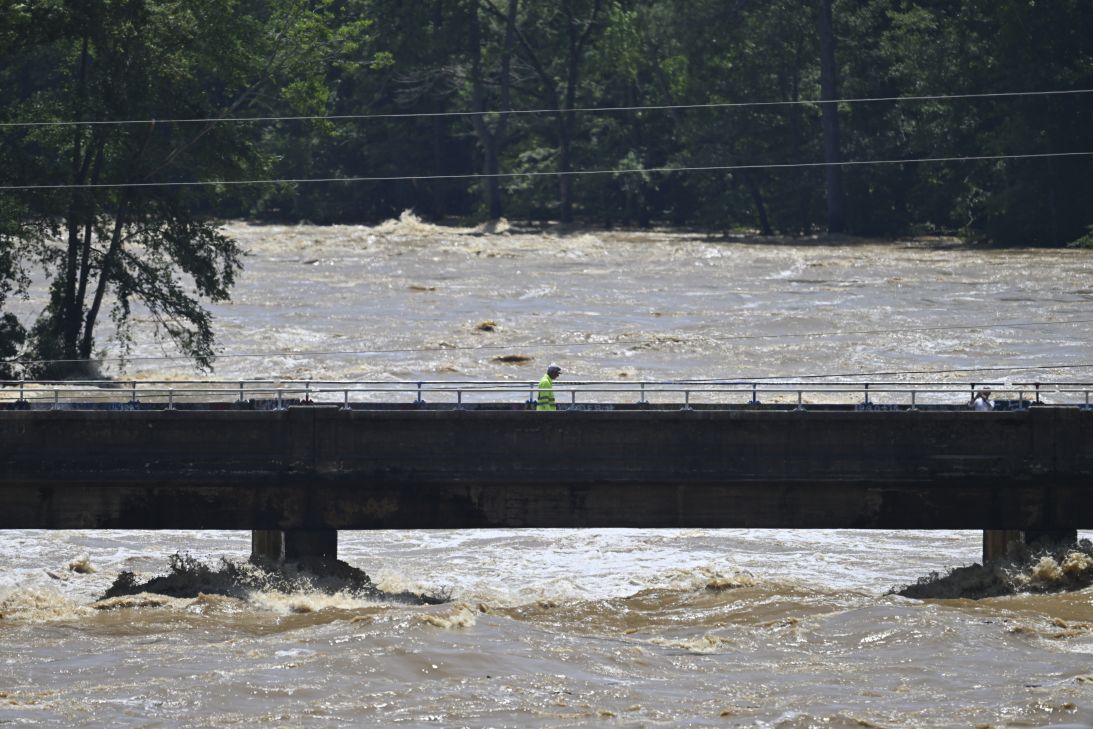
This summer, in particular, has been defined by a tragic surge in deadly flash floods across the United States, underscoring the escalating volatility of our warming world.

It’s no accident this is the summer of flooding, climate scientists say, with 100-year to 1,000-year deluges happening nearly simultaneously in multiple states on multiple days.

Large parts of the US have seen an unusually humid summer with record amounts of moisture in the air. When cold fronts and other weather systems come along, that moisture can get wrung out, squeezed like a water-laden sponge, yielding heavy and often highly localized downpours.

For much of the summer, the atmospheric conditions over the US have funneled humid air north from the unusually warm Gulf and western Atlantic, including the Gulf Stream, UCLA climate researcher Daniel Swain told CNN. This has yielded unusually high levels of moisture at all levels of the atmosphere across the US east of the Rockies, Swain said.

It has led to record levels of what meteorologists call precipitable water, which is the amount of rain that would result from instantaneously extracting all the water in the air.

This pattern has led to one flash flood after another.

Omar Gutierrez, 31, helps clear debris from the inundated dining area of La Salsa Kitchen, a Mexican restaurant, after deadly flash flooding in Ruidoso, New Mexico, July 9, 2025. Paul Ratje/Reuters

First and foremost, there was the devastating Texas flood that killed more than 130 people on the night of July 4. But flash flood events have been focused elsewhere as well. Three people were killed in a flash flood related to torrential rains falling on a wildfire burn scar in Ruidoso, New Mexico, on July 8.

Some major roads in Chicago were suddenly under water when a 1,000-year rainfall event struck in early July. In portions of North Carolina, the remnants of Tropical Storm Chantal led to deadly heavy rain and flooding the same weekend as the Texas tragedy. In New York City, water rushed into the subway tunnels when the city saw its second-heaviest rainfall total in one hour on July 14, with widespread flash flooding lasting into the 15th. And this past week, it was Kansas City’s turn to flood on July 17.

Some of these floods resulted from rainfall that has a return frequency of about 1,000 years, meaning it has just a 0.1% chance of occurring in any given year. But climate change is loading the dice in favor of extreme precipitation.

“When we talk about e.g. ‘1000 year’ events, we’re talking about the likelihood of these events in the absence of human-caused warming (i.e. how often we would expect them from natural variability alone),” said climate scientist Michael Mann of the University of Pennsylvania. “These events are of course much more frequent *because* of human-caused warming,” he said in an email.


But his research has identified other factors, such as persistent large-scale weather patterns known as “atmospheric resonance,” that can make extreme weather, including floods, even more likely. Just as sound waves or ocean waves can resonate and reinforce each other, atmospheric resonance can happen to undulating jet stream patterns in the upper atmosphere, resulting in weather systems that stay in place for weeks.

A recent study Mann worked on found such weather patterns have tripled in incidence since the mid-20th century during the summer months. The problem is these patterns are “not necessarily well-captured in climate models,” he said. This increases uncertainty about future projections for extreme weather trends.

The influence of climate change on heavy rainfall is most evident when it comes to short duration extreme events, like what has happened repeatedly this summer, according to Swain.

“It is not average precipitation that really is most affected by climate change,” Swain said. “It truly is mathematically correct that the more extreme the rain event, the clearer the connection to climate change is.”
Tropical Storm Chantal flooded central North Carolina with torrential rain, seen here in Chapel Hill on July 7, 2025. Peter Zay/Anadolu/Getty Images

The physics of how global warming affects heavy precipitation events is well known, according to climate scientist Kate Marvel.

“This is almost a textbook example of climate change impacts,” she told CNN. “The science behind it is so basic you can see it in daily life. Warm water drives more evaporation — the bathroom gets much steamier after a hot bath than a cold one,” she said.

“Warm air contains more water vapor — a cold beer gets wet on the outside on a hot day, because when air comes into contact with the cooler surface, it has to condense out its water vapor,” Marvel said.

“Warm ground makes it easier for moist air to balloon upwards – this is why thunderstorms happen on hot summer afternoons. Put these all together, and you get the perfect conditions for torrential rain,” said Marvel, author of the new climate book “Human Nature.”

“Whether a downpour turns into a catastrophic flood depends on a lot of things: how porous the ground is, the topography of the area, the people and things in harm’s way. But there is absolutely no doubt that climate change, caused by human emissions of greenhouse gases, is making extreme rainfall more extreme.”

댓글

이 블로그의 인기 게시물

From our August Home and Garden publication: Columbia Gorge Beekeepers: Megachilinae / Leafcutter

 From our August Home and Garden publication: Columbia Gorge Beekeepers: Megachilinae / Leafcutter From our August Home and Garden publication: Columbia Gorge Beekeepers: Megachilinae / Leafcutter Summer is in full swing! Hopefully you have ventured outside exploring the flora that brings beauty to the Columbia Gorge area. Have you seen any native bees visiting their grocery store — the flowers and plants? Native bees are out foraging for nectar and pollen to support their brood (babies). Each egg must have a bit of nectar and a splash of pollen. Honey bees, on the other hand, forage not only for their brood but sustenance for the long winter months ahead. The native bee’s queen hibernates through the wintry season, only surviving one year. Thus, the need for nectar stores is unnecessary. There exists a symbiotic relationship between pollinators and the flora surrounding their habitat. The plants and flowers rely on pollinators to move pollen from the flower’s anther (male part) to...

She Was Dying—Then a Swarm of Stinging Bees Healed Her

She Was Dying—Then a Swarm of Stinging Bees Healed Her One sunny day, Ellie Lobel, who had a Ph.D. in nuclear physics and three children, was attacked by a horde of Africanized bees, commonly called “killer” bees. Lobel shielded her eyes and expected to have a deadly anaphylactic reaction, she said in a 2015 BBC article describing her experience. The 45-year-old English woman was in palliative care in California because she was dying from Lyme disease. She had stepped outside to experience some sunshine and peace when the bees attacked. Swollen and in pain, Lobel expected the end was imminent. At least, that’s what she thought. Fifteen years earlier, Lobel had unknowingly endured a tick bite. The tick carried the bacteria Borrelia burgdorferi, which causes Lyme disease. If caught in time, Lyme disease is treatable with antibiotics, though the bacteria are known to sneak around the immune system and even cause flare-ups long after apparent recovery. Borrelia burgdorferi can travel e...

BeeArc Project: Pioneering a Sustainable Future for Bees and Humans

BeeArc Project: Pioneering a Sustainable Future for Bees and Humans In the picturesque village of Goathland, near Whitby, a groundbreaking initiative, the £5m BeeArc project, has taken flight. Designed for environmental activists, concerned citizens, and curious minds, this project delves into the intricate challenges faced by honeybees and, by extension, humanity. In an era of unprecedented change and instability, the honeybee finds itself at a critical juncture. Colony Collapse Disorder, where bees abandon their hives en masse, has wreaked havoc globally, with a staggering 40% disappearance in the US in 2014. The crisis is not just a distant woe; it's affecting honeybees locally, threatening their very existence. James Fearnley, founder and project director, passionately states, “The honeybee is at the end of its tether. The colonies are literally falling apart.” Drawing on 30 years of research, Fearnley proposes a revolutionary approach – harnessing natural medicines from honeyb...

Non-contact exposure to dinotefuran disrupts honey bee homing by altering MagR and Cry2 gene expression

  Non-contact exposure to dinotefuran disrupts honey bee homing by altering  MagR  and  Cry2  gene expression Dinotefuran is known to negatively affect honeybee ( Apis mellifera ) behavior, but the underlying mechanism remains unclear. The magnetoreceptor ( MagR , which responds to magnetic fields) and cryptochrome ( Cry2 , which is sensitive to light) genes are considered to play important roles in honey bees’ homing and localization behaviors. Our study found that dinotefuran, even without direct contact, can act like a magnet, significantly altering  MagR  expression in honeybees. This non-contact exposure reduced the bees’ homing rate. In further experiments, we exposed foragers to light and magnetic fields, the  MagR  gene responded to magnetic fields only in the presence of light, with  Cry 2 playing a key switching role in the magnetic field receptor mechanism ( MagR–Cry2 ). Yeast two-hybrid and BiFc assays confirmed an interactio...

What to do if you see a bee on the ground, according to an expert

What to do if you see a bee on the ground, according to an expert You've no doubt seen bees buzzing around flowers or even nestling among blades of grass, but when you spot them chilling on the pavement it can raise various questions – not least: "Are they okay?" Even if they are still alive – the average lifespan of workers is just four to six weeks – bumblebees occasionally end up on the ground for of a variety of reasons. Amy Ross, a senior ecologist for Kent Wildlife Trust , explains to Yahoo UK why this happens and, more crucially, what you can do to help them. What type of bees are they? There are more than 250 species of bees native to the UK. (Getty Images) It's important to note that there are more than 250 species of bees native to the UK – 24 of which are bumblebees. Bumblebees can be identified using this helpful chart from the Bumblebee Conservation Trust and are more than likely the kind you'll spot on the ground. What's more, around 70% of th...

Suncheon Bay: A Triumph for Environmental Stewardship and Migratory Bird Conservation

  Suncheon Bay: A Triumph for Environmental Stewardship and Migratory Bird Conservation Nestled in the heart of Haeryong-myeon, Suncheon-si, Jeollanam-do, the scenic 92m high hill on the 1st of January provides a breathtaking panorama of Suncheon Bay. The awe of around 10 tourists is palpable as they gaze down from two Yongsan observatories onto the vast expanse below, where approximately 400 cranes gracefully take flight over 2,800 ha of pristine mudflats and reed fields. The Suncheon Bay Eco-Friendly Project In 2006, Suncheon City, in collaboration with its citizens, embarked on an ambitious eco-friendly project when Suncheon Bay earned recognition in the Ramsar Convention—an international treaty for wetland protection. Over the years, the project has yielded remarkable results, with the number of whooping cranes doubling in just four years. Preserving Biodiversity Through Strategic Initiatives To safeguard the ecosystem, preventive measures were implemented against diseases like...

10 deadliest bees you should never mess with

  10 deadliest bees you should never mess with Bees play a vital role in pollination and ecosystems, but not all are the gentle garden visitors we imagine. Some bees—and wasp-like relatives—pack a powerful sting, show extreme aggression, or defend their nests with deadly force.  Whether it’s their painful venom, swarming behavior, or territorial nature, these species are not to be taken lightly. From tropical rainforests to suburban backyards, they command respect. In this list, we explore the world’s top 10 deadliest bee and bee-like species you should never provoke, complete with their nicknames, regions, threat levels, and evolutionary origins. Dangerous bees  found across the world including  Yellow Jacket , Warrior Wasp, and more 1. Africanised  Honey Bee  – “The Killer Bee” One of the most dangerous stinging insects in the world, the Africanised honey bee is found across South and Central America and parts of the southern U.S.  These bees are ext...

Giant hail threat increases for Australian cities as climate warms

Giant hail threat increases for Australian cities as climate warms In short: Hailstorms will become more frequent in Brisbane, Sydney and Canberra, while the risk of "giant" hail will increase for others, including Melbourne and Perth. The new study by the University of New South Wales shows the relationships between a warming climate and the severity of hailstorms across most major Australian cities. What's next? The study's lead researcher, Dr Tim Raupach, says it is imperative to reduce emissions, but Australia also needs to consider the increased risk from hail damage in its building codes. The frequency of "giant" hail and the number of hail days in a season could increase substantially for multiple Australian cities as the climate warms, a new study has found. The University of New South Wales study modelled the severity of hailstorms for the current and future climate across Australia's most hail-prone major cities, including Brisbane, the Sydney...

“Global honey crisis”: Testing technology and local sourcing soars amid fraud and tampering concerns

  “Global honey crisis”: Testing technology and local sourcing soars amid fraud and tampering concerns The World Beekeeping Awards will not grant a prize for honey next year due to the “inability” to thoroughly test honey for adulteration. The announcement comes amid the rise of honey fraud in the EU, where a 2023 investigation found that 46% of 147 honey samples tested were likely contaminated with low-cost plant syrups.  Apimondia, the International Federation of Beekeepers’ Associations, organizes the event at its Congress, whose 49th edition will be held in Copenhagen, Denmark, in September 2025. The conference brings together beekeepers, scientists and other stakeholders. “We will celebrate honey in many ways at the Congress, but honey will no longer be a category, and thus, there will be no honey judging in the World Beekeeping Awards. The lessons learned from Canada 2019 and Chile 2023 were that adequate testing was impossible if we are to award winning honey at the Con...

Decoding the Cold: Understanding the Dynamics of Cold Snaps and Waves

  Decoding the Cold: Understanding the Dynamics of Cold Snaps and Waves As we brace ourselves for an impending cold snap, it's crucial to demystify the nuances between a fleeting chill and a more prolonged, impactful cold wave. Meteorologically speaking, these are two distinct phenomena, each with its own characteristics and potential consequences. 🌬️❄️ Cold Snap vs. Cold Wave:  🔄🌡️ When the cold lingers for a brief period, typically 1-2 days, we label it a cold snap. It's transient and relatively mild. However, when the cold persists for three days or more, spreading its influence far and wide, we term it a cold wave. This distinction is pivotal as it helps us gauge the severity and duration of the impending chill. Siberian Cold Snap: A Tidal Wave of Cold Waves:  🌊❄️ Drawing a metaphorical comparison to a tidal wave, the Siberian cold snap ebbs and flows, resembling the rhythmic patterns of a tide. This upcoming cold snap is poised to be a formidable cold wave, impac...