기본 콘텐츠로 건너뛰기

HEADLINE DESK

DKBEE.COM 최신 주요 리포트

최신 기사를 불러오는 중입니다...

LATEST INSIGHTS

분야별 심층 분석

‘Honey will soon be just a memory’: beekeepers in Tatarstan face losses again due to agricultural activities


‘Honey will soon be just a memory’: beekeepers in Tatarstan face losses again due to agricultural activities


This season, the industry has suffered from a mass bee die-off in several districts of the republic and weather anomalies
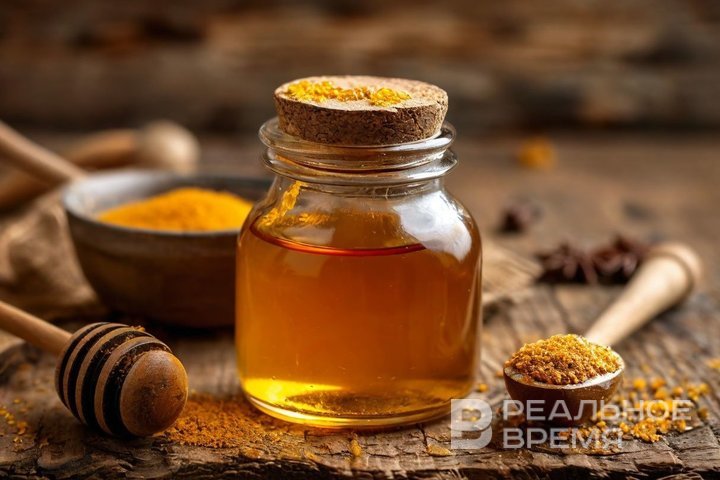
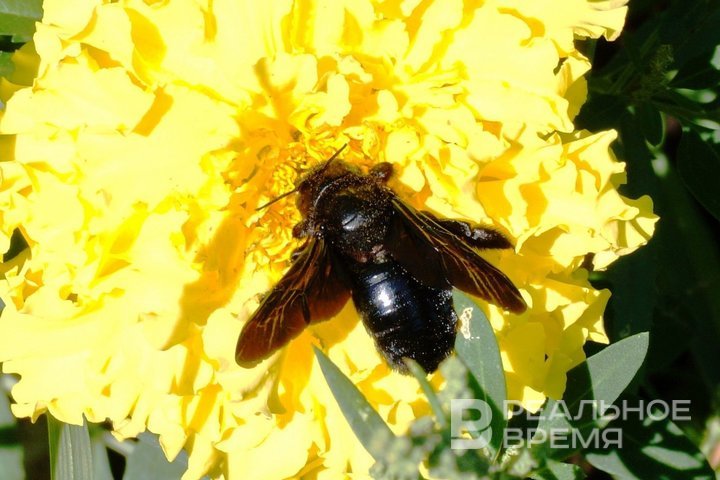
Photo: Реальное время


This year, beekeepers in Tatarstan have faced new challenges: mass bee die-offs in four districts of the republic, abnormally cold nights during the linden bloom, and a rise in counterfeit honey on the market. Climate disruptions have been reducing yields in the region for the third consecutive year, while agricultural producers are exacerbating the crisis in the industry. How beekeeping is adapting to climate anomalies and whether store-bought honey can still be trusted — in a report by Realnoe Vremya.


“We are left alone with natural anomalies”

In recent years, climate change has posed a serious threat to beekeeping in Tatarstan. Abnormal temperature fluctuations, shifts in the flowering periods of nectar plants, and an increase in cases of bee poisoning by pesticides have led to a sharp decline in honey yields.

Experienced beekeepers say that night temperatures below 14 degrees Celsius block nectar secretion.

“If the temperature drops below 14 degrees at night, there is no nectar. The linden may bloom, but the bees have nothing to gather. This year, the linden bloomed on June 18, but for the first week the bees didn’t fly at all — the nights were cold,” said Shavkat Khairullin, chairman of the Beekeepers of Tatarstan NGO.

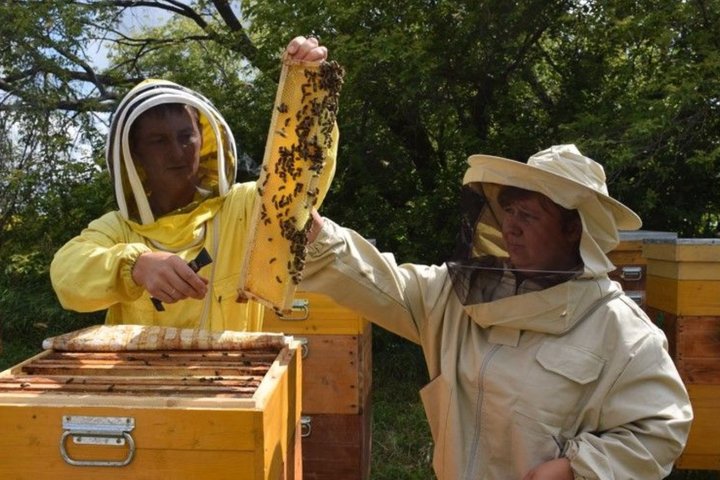
Ideal conditions for nectar secretion require stable warmth both day and night, with temperatures ranging from +18 to +22 degrees Celsius. The past three years have been especially difficult for linden honey harvests. In 2022, pests attacked the linden; in 2023, spring frosts destroyed its flowers; and in 2024, cold nights during flowering prevented bees from collecting nectar.Арсений Фавстрицкий / realnoevremya.ru

The linden’s flowering is also crucial for the ecosystem: meadow grasses and sunflowers follow it. A disruption in linden blooming throws off the entire honey harvest schedule. “Now the sunflower has bloomed, but that honey is the cheapest. At the same time, there is so much of it that the price is falling,” emphasised Shavkat Khairullin.

Weather changes also affect the bees themselves. An early spring followed by frost weakens colonies, while a cold June shifts their development schedule. For effective honey harvesting, a colony needs around 80,000 bees.

“We are left alone with natural anomalies,” stated the chairman of the NGO.

To cope with the challenges posed by the climate, it is necessary to:carefully monitor temperature forecasts;
strengthen colonies before potential honey flows;
have alternative nectar sources in case of linden failure;
prepare for climate surprises.

“Every year is now abnormal. One year it’s frost, the next heat, then drought. We have to be ready for anything. The situation calls for a comprehensive approach: from developing new beekeeping methods to state support for an industry on the front lines of climate change,” the beekeeper concluded.

Beekeepers note that there is no need to worry about shortages: this year’s honey harvest is expected to reach the same volume as last year. It is worth recalling that in 2024, Tatarstan produced 4,000 tonnes of honey.
Mass death of bees

However, another problem worries industry representatives. This year, a mass die-off of bees occurred in the Aktanysh district of Tatarstan, which also affected neighbouring Bashkiria. Thousands of insects died, but the culprits have yet to be identified.

“A commission came, took samples, but whether it was Bashkir agrarians or ours who poisoned the bees remains a mystery. Bees also died in the Baltasinsky district, where an agrarian promised to compensate the damage, but we know these promises: ‘Tomorrow, the day after tomorrow,’ and then they just refuse,” said the chairman of the Tatarstan Beekeepers’ Association.

Currently, a trial is underway in Naberezhnye Chelny against an agricultural company responsible for the poisoning of bees in the Almetyevsk and Tukaevsky districts. The agrarians initially agreed to compensate for the damage but later refused to fulfil their promises.Минсельхозпрод РТ

“In Almetyevsk, they wrote an IOU and disappeared. The same happened in Tukaevsky. Only in one case did we manage to assemble a commission and document the bee deaths. Now, this is our only evidence in court. Without proof, you will simply be dismissed. Everyone makes promises, but in the end, the beekeepers are left with nothing,” explains Khairullin.

To survive in such conditions, beekeepers advise following several rules:Immediately call a commission in case of mass bee deaths;
Preserve the dead bees in a refrigerator;
Document everything in writing — receipts, reports, photos;
Prepare for court — most agricultural producers pay only by court order.

Without strict control over pesticide use and real support for beekeepers, the industry could face collapse. The court case in Naberezhnye Chelny is the last hope for justice, but even if successful, it will not stop the mass death of bees across the region.

“We lose bees every year. Climate, chemicals, the irresponsibility of agricultural producers. Soon honey will exist only in memories,” warned the beekeeper.The only advice from experienced beekeepers: “Document everything. Without paperwork, you are just another victim forgotten by the next day.”
Half of the honey tested on the market is counterfeit

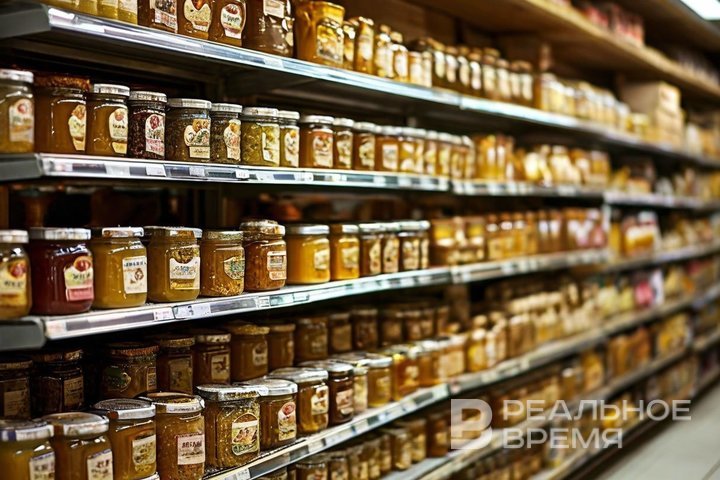
Roskachestvo conducted a study of 20 honey brands and found that every second one shows signs of falsification or does not meet the declared specifications.

According to the organisation, products from only 10 out of the 20 brands tested comply with mandatory safety and quality standards. The main issue lies in the use of sugar syrups to dilute the honey.

Specifically, five brands, including three varieties of the Medovy Kray brand and two varieties of O’Key, showed discrepancies in a critical indicator — the ratio of fructose to glucose. This is a clear sign that producers may be adding cheap syrups to reduce production costs.

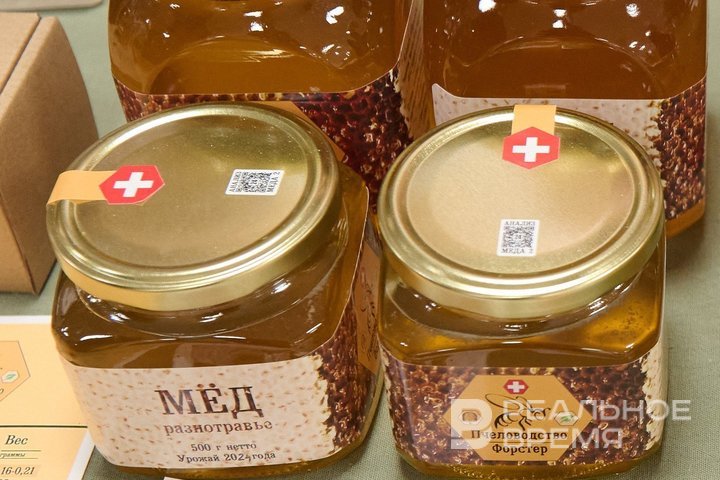
Additionally, in three samples, including products from Ivanova Paseka, the proline level was below the norm. This may indicate immature honey or its falsification. Furthermore, four brands showed discrepancies in diastase levels — an indicator that points to overheating or adulteration of the product.Реальное время / realnoevremya.ru

Mislabelling of the actual honey variety was found in five brands, including Vkusvill and Market Perekrestok. However, experts note that the situation is improving: while nine brands were found to be in violation in 2024, the number has dropped to five in the current study. The highest quality brands were Aushan, Berestov A. S., and Lenta, while the most serious violations were recorded in products from O’Key.”

Regulatory authorities have already begun responding to the situation. Companies have been issued warnings about the inadmissibility of violating mandatory legal requirements.

“The analysis showed that one of the most popular products among Russians — bee honey — lacked mandatory and standardized quality requirements,” said Sergey Mitin, First Deputy Chairman of the Federation Council Committee on Agrarian and Food Policy and Environmental Management.Динар Фатыхов / realnoevremya.ru

It is worth recalling that the Russian Ministry of Industry and Trade plans to conduct an experiment on honey and several other products labelling. From August 1, 2025, to February 28, 2026, this experiment will introduce labelling for honey.

As part of the experiment, labelling will apply to products intended for thermal processing, as well as honey and honey-based products packaged for consumer sale.
By 2030, Russia’s honey exports are expected to reach $10 million

In 2024, Russia set a historic record in honey exports, shipping more than 5,000 tonnes abroad. This is 40% higher than in 2023, according to a study by Agroexport.

More than 50 countries have become buyers of domestic honey, with Slovakia standing out among them: shipments to this country increased 2.3 times, reaching 1,200 tonnes. Slovakia, which only began importing Russian honey in 2023, is now the largest importer of the product.

Exports to Serbia also showed impressive growth, increasing 2.3 times to exceed 1,000 tonnes. China rounds out the top three importers, although shipments to the country fell by 3% compared to last year, totaling 800 tonnes.Динар Фатыхов / realnoevremya.ru

Russia confidently holds a place among the top 10 largest honey producers, and experts believe there is significant potential for further growth. According to forecasts, Russia’s honey exports could reach $10 million by 2030.
Source : https://realnoevremya.com/articles/8968-beekeepers-in-tatarstan-face-losses-again-due-to-agricultural-activities

댓글

이 블로그의 인기 게시물

From our August Home and Garden publication: Columbia Gorge Beekeepers: Megachilinae / Leafcutter

 From our August Home and Garden publication: Columbia Gorge Beekeepers: Megachilinae / Leafcutter From our August Home and Garden publication: Columbia Gorge Beekeepers: Megachilinae / Leafcutter Summer is in full swing! Hopefully you have ventured outside exploring the flora that brings beauty to the Columbia Gorge area. Have you seen any native bees visiting their grocery store — the flowers and plants? Native bees are out foraging for nectar and pollen to support their brood (babies). Each egg must have a bit of nectar and a splash of pollen. Honey bees, on the other hand, forage not only for their brood but sustenance for the long winter months ahead. The native bee’s queen hibernates through the wintry season, only surviving one year. Thus, the need for nectar stores is unnecessary. There exists a symbiotic relationship between pollinators and the flora surrounding their habitat. The plants and flowers rely on pollinators to move pollen from the flower’s anther (male part) to...

She Was Dying—Then a Swarm of Stinging Bees Healed Her

She Was Dying—Then a Swarm of Stinging Bees Healed Her One sunny day, Ellie Lobel, who had a Ph.D. in nuclear physics and three children, was attacked by a horde of Africanized bees, commonly called “killer” bees. Lobel shielded her eyes and expected to have a deadly anaphylactic reaction, she said in a 2015 BBC article describing her experience. The 45-year-old English woman was in palliative care in California because she was dying from Lyme disease. She had stepped outside to experience some sunshine and peace when the bees attacked. Swollen and in pain, Lobel expected the end was imminent. At least, that’s what she thought. Fifteen years earlier, Lobel had unknowingly endured a tick bite. The tick carried the bacteria Borrelia burgdorferi, which causes Lyme disease. If caught in time, Lyme disease is treatable with antibiotics, though the bacteria are known to sneak around the immune system and even cause flare-ups long after apparent recovery. Borrelia burgdorferi can travel e...

BeeArc Project: Pioneering a Sustainable Future for Bees and Humans

BeeArc Project: Pioneering a Sustainable Future for Bees and Humans In the picturesque village of Goathland, near Whitby, a groundbreaking initiative, the £5m BeeArc project, has taken flight. Designed for environmental activists, concerned citizens, and curious minds, this project delves into the intricate challenges faced by honeybees and, by extension, humanity. In an era of unprecedented change and instability, the honeybee finds itself at a critical juncture. Colony Collapse Disorder, where bees abandon their hives en masse, has wreaked havoc globally, with a staggering 40% disappearance in the US in 2014. The crisis is not just a distant woe; it's affecting honeybees locally, threatening their very existence. James Fearnley, founder and project director, passionately states, “The honeybee is at the end of its tether. The colonies are literally falling apart.” Drawing on 30 years of research, Fearnley proposes a revolutionary approach – harnessing natural medicines from honeyb...

Non-contact exposure to dinotefuran disrupts honey bee homing by altering MagR and Cry2 gene expression

  Non-contact exposure to dinotefuran disrupts honey bee homing by altering  MagR  and  Cry2  gene expression Dinotefuran is known to negatively affect honeybee ( Apis mellifera ) behavior, but the underlying mechanism remains unclear. The magnetoreceptor ( MagR , which responds to magnetic fields) and cryptochrome ( Cry2 , which is sensitive to light) genes are considered to play important roles in honey bees’ homing and localization behaviors. Our study found that dinotefuran, even without direct contact, can act like a magnet, significantly altering  MagR  expression in honeybees. This non-contact exposure reduced the bees’ homing rate. In further experiments, we exposed foragers to light and magnetic fields, the  MagR  gene responded to magnetic fields only in the presence of light, with  Cry 2 playing a key switching role in the magnetic field receptor mechanism ( MagR–Cry2 ). Yeast two-hybrid and BiFc assays confirmed an interactio...

What to do if you see a bee on the ground, according to an expert

What to do if you see a bee on the ground, according to an expert You've no doubt seen bees buzzing around flowers or even nestling among blades of grass, but when you spot them chilling on the pavement it can raise various questions – not least: "Are they okay?" Even if they are still alive – the average lifespan of workers is just four to six weeks – bumblebees occasionally end up on the ground for of a variety of reasons. Amy Ross, a senior ecologist for Kent Wildlife Trust , explains to Yahoo UK why this happens and, more crucially, what you can do to help them. What type of bees are they? There are more than 250 species of bees native to the UK. (Getty Images) It's important to note that there are more than 250 species of bees native to the UK – 24 of which are bumblebees. Bumblebees can be identified using this helpful chart from the Bumblebee Conservation Trust and are more than likely the kind you'll spot on the ground. What's more, around 70% of th...

Suncheon Bay: A Triumph for Environmental Stewardship and Migratory Bird Conservation

  Suncheon Bay: A Triumph for Environmental Stewardship and Migratory Bird Conservation Nestled in the heart of Haeryong-myeon, Suncheon-si, Jeollanam-do, the scenic 92m high hill on the 1st of January provides a breathtaking panorama of Suncheon Bay. The awe of around 10 tourists is palpable as they gaze down from two Yongsan observatories onto the vast expanse below, where approximately 400 cranes gracefully take flight over 2,800 ha of pristine mudflats and reed fields. The Suncheon Bay Eco-Friendly Project In 2006, Suncheon City, in collaboration with its citizens, embarked on an ambitious eco-friendly project when Suncheon Bay earned recognition in the Ramsar Convention—an international treaty for wetland protection. Over the years, the project has yielded remarkable results, with the number of whooping cranes doubling in just four years. Preserving Biodiversity Through Strategic Initiatives To safeguard the ecosystem, preventive measures were implemented against diseases like...

10 deadliest bees you should never mess with

  10 deadliest bees you should never mess with Bees play a vital role in pollination and ecosystems, but not all are the gentle garden visitors we imagine. Some bees—and wasp-like relatives—pack a powerful sting, show extreme aggression, or defend their nests with deadly force.  Whether it’s their painful venom, swarming behavior, or territorial nature, these species are not to be taken lightly. From tropical rainforests to suburban backyards, they command respect. In this list, we explore the world’s top 10 deadliest bee and bee-like species you should never provoke, complete with their nicknames, regions, threat levels, and evolutionary origins. Dangerous bees  found across the world including  Yellow Jacket , Warrior Wasp, and more 1. Africanised  Honey Bee  – “The Killer Bee” One of the most dangerous stinging insects in the world, the Africanised honey bee is found across South and Central America and parts of the southern U.S.  These bees are ext...

Giant hail threat increases for Australian cities as climate warms

Giant hail threat increases for Australian cities as climate warms In short: Hailstorms will become more frequent in Brisbane, Sydney and Canberra, while the risk of "giant" hail will increase for others, including Melbourne and Perth. The new study by the University of New South Wales shows the relationships between a warming climate and the severity of hailstorms across most major Australian cities. What's next? The study's lead researcher, Dr Tim Raupach, says it is imperative to reduce emissions, but Australia also needs to consider the increased risk from hail damage in its building codes. The frequency of "giant" hail and the number of hail days in a season could increase substantially for multiple Australian cities as the climate warms, a new study has found. The University of New South Wales study modelled the severity of hailstorms for the current and future climate across Australia's most hail-prone major cities, including Brisbane, the Sydney...

“Global honey crisis”: Testing technology and local sourcing soars amid fraud and tampering concerns

  “Global honey crisis”: Testing technology and local sourcing soars amid fraud and tampering concerns The World Beekeeping Awards will not grant a prize for honey next year due to the “inability” to thoroughly test honey for adulteration. The announcement comes amid the rise of honey fraud in the EU, where a 2023 investigation found that 46% of 147 honey samples tested were likely contaminated with low-cost plant syrups.  Apimondia, the International Federation of Beekeepers’ Associations, organizes the event at its Congress, whose 49th edition will be held in Copenhagen, Denmark, in September 2025. The conference brings together beekeepers, scientists and other stakeholders. “We will celebrate honey in many ways at the Congress, but honey will no longer be a category, and thus, there will be no honey judging in the World Beekeeping Awards. The lessons learned from Canada 2019 and Chile 2023 were that adequate testing was impossible if we are to award winning honey at the Con...

Decoding the Cold: Understanding the Dynamics of Cold Snaps and Waves

  Decoding the Cold: Understanding the Dynamics of Cold Snaps and Waves As we brace ourselves for an impending cold snap, it's crucial to demystify the nuances between a fleeting chill and a more prolonged, impactful cold wave. Meteorologically speaking, these are two distinct phenomena, each with its own characteristics and potential consequences. 🌬️❄️ Cold Snap vs. Cold Wave:  🔄🌡️ When the cold lingers for a brief period, typically 1-2 days, we label it a cold snap. It's transient and relatively mild. However, when the cold persists for three days or more, spreading its influence far and wide, we term it a cold wave. This distinction is pivotal as it helps us gauge the severity and duration of the impending chill. Siberian Cold Snap: A Tidal Wave of Cold Waves:  🌊❄️ Drawing a metaphorical comparison to a tidal wave, the Siberian cold snap ebbs and flows, resembling the rhythmic patterns of a tide. This upcoming cold snap is poised to be a formidable cold wave, impac...