기본 콘텐츠로 건너뛰기

HEADLINE DESK

DKBEE.COM 최신 주요 리포트

최신 기사를 불러오는 중입니다...

LATEST INSIGHTS

분야별 심층 분석

Why climate change is a heart attack, and what we can do about it


Why climate change is a heart attack, and what we can do about it


Climate change and cardiovascular disease are intrinsically linked, and more needs to be done to combat this existential threat to human health.


It was during the devastating 2019–20 bushfires, when the sky was black with smoke, and hazardous air quality meant keeping my young children indoors, that I was prompted to investigate the effects of climate change on cardiovascular disease (CVD).


From being “deeply concerned” about climate change, I became “absolutely terrified”.


Burning fossil fuels (coal, oil and gas) is the main driver of global warming, which increases extreme weather events (heat/heatwaves, bushfires, floods, cyclones, dust storms); air pollution; food and water insecurity; impacts the spread of vector borne illnesses; and disrupts health care delivery, all of which, directly or indirectly, increase the risk of CVD.


Heat


Heat kills — it’s the silent assassin of climate change. The primary cause of death during a heatwave is from cardiovascular events. Extreme heat increases deaths and hospitalisations from CVD. Heatwaves are associated with an 11% increase in cardiovascular deaths, and the more intense the heatwave, the greater the risk. Multiple Australian and New Zealand studies have shown increased rates of ischaemic heart disease (IHD) deaths and hospitalisations with extreme heat. With global warming, population growth, and an ageing population, rates of IHD — currently the leading cause of death in Australia — will continue to increase. A recent paper found that high temperatures accounted for 7.3% of CVD morbidity and mortality in Australia; by 2050 this is expected to double with population growth and no adaptation.
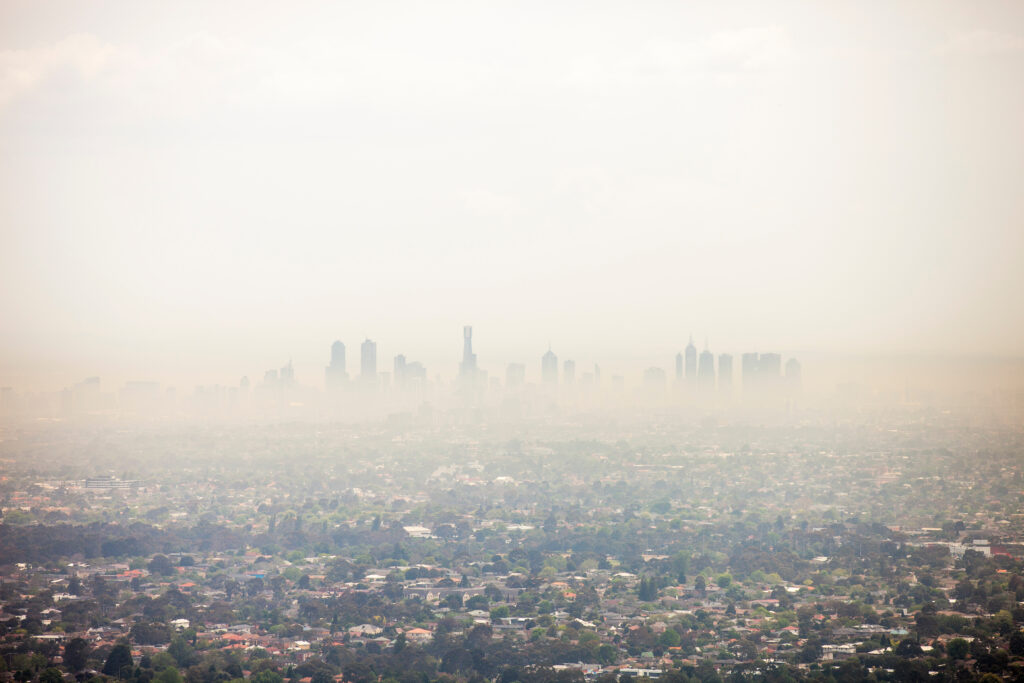


Bushfire smoke is associated with increased ischaemic heart disease morbidity and mortality (timallenphoto / Shutterstock).


Air pollution


Air pollution is the fourth highest modifiable risk factor for CVD, contributing to more CVD deaths and disability-adjusted life years than smoking. Additionally , there is extensive evidence linking air pollution to multiple cardiovascular conditions including IHD, heart failure and arrhythmias.


Climate change and air pollution are interlinked. The major driver of air pollution, fossil fuel combustion, is also a source of greenhouse gas emissions (GHGe), which increases climate change; while extreme weather events, such as bushfires, made worse by climate change, increase air pollution, creating a vicious cycle.


The increase in frequency and severity of bushfires, and the associated bushfire smoke is associated with increased IHD morbidity and mortality. Australia’s 2019–20 bushfire smoke contributed to 1124 CVD hospitalisations. A separate study has estimated that the increase in daily particulate matter less than 2.5 µm in diameter (PM2.5) is associated with an increased daily CVD mortality by 4.5%.


Extreme weather events have synergistic effects: extreme heat amplifies the CVD mortality/morbidity effects of wildfire smoke.


Finally, climate change worsens mental health, and poor mental health increases CVD.Extreme weather events can also cause Takotsubo, a type of heart failure often triggered by emotional stress, for example someone losing their home after a flood.


Cardiac co-benefits of climate change mitigation


There are measures that benefit both our hearts and the planet.


Plant-based diets


Beef production constitutes more than 50% of agriculture’s GHGe, and is the number one cause of deforestation in Australia. High red/processed meat and dairy consumption contributed to 12 100 deaths in Australia in 2021. These meats increase CVD risk and mortality, while plant-based foods reduce this risk.The Mediterranean, pescatarian, and vegetarian diets lower GHGe and CVD risk, while omnivorous diets increase emissions.


Increase active and green transport


Road transport relies heavily on fossil fuels and contributes significant GHGe. Traffic-related air pollution is associated with increased CVD deaths and myocardial infarctions. In Australia, motor vehicle emissions are likely to contribute to more than 10 000 premature deaths and 11 000 CVD hospitalisations annually. Increasing active transport, such as walking, cycling and taking public transport would reduce emissions from private motor vehicle use and provide significant health benefits, including lowering CVD.


Transitioning to electric vehicles for personal and public transport and minimising idling of combustion-engine vehicles will help reduce traffic-related air pollution and improve health outcomes.


Change to renewable energy sources (eg, solar and wind)


Approximately 8.3 million people globally die each year due to outdoor air pollution from PM2.5 and ozone alone; 5.1 million of these deaths were linked to fossil fuels, 2.54 million from IHD. Changing to renewable energy sources reduces GHGe, air pollution and its adverse health effects, including CVD deaths and hospitalisations. Shutting a US coal coking plant led to a lasting decline in local cardiovascular emergency department visits.


Increase green spaces, reduce deforestation


Trees and forests are important carbon sinks, reduce greenhouse gases, improve air quality, and are biodiversity reservoirs. Increasing green spaces and spending more time in nature has multiple health benefits, including reducing CVD, cancer and mental illness. Trees also provide shade, reduce the urban heat island effect and heat-related illness.


Practise health care sustainability


While climate change contributes to increasing health care demands, the health care sector itself accounts for about 5–7% of Australia’s GHGe.A recent government and medical college endorsed joint statement iterated: we need to prioritise prevention, to improve health while reducing health care demand and associated emissions; minimise potentially harmful and wasteful care (which accounts for around 30% of clinical care emissions); and minimise emissions associated with high-value care delivery.


Finally, “we must cure the sickness of climate inaction.” Doctors pledge to “do no harm” — we should all be involved in battling climate change, the biggest threat to public health. Doctors need to speak up. We can use our voice to advocate for governments to consider the enormous economic and health costs of climate change-driven extreme weather events, before approving fossil fuel projects. The $14.5 billion ($27,581/minute) in government subsidies to fossil fuel producers who are harming health, would be better spent helping the health care system decarbonise and adapt to the growing health threats of climate change.


A healthy and happy heart needs a healthy planet.


Dr Fiona Foo is a clinical and interventional cardiologist and Co-Vice Chair Doctors for the Environment Australia (DEA) NSW Committee.


The statements or opinions expressed in this article reflect the views of the authors and do not necessarily represent the official policy of the AMA, the MJA or InSight+ unless so stated.

Subscribe to the free InSight+ weekly newsletter here. It is available to all readers, not just registered medical practitioners.

If you would like to submit an article for consideration, send a Word version to mjainsight-editor@ampco.com.au.


2 thoughts on “Why climate change is a heart attack, and what we can do about it”Dr Anthony Hull says:
June 23, 2025 at 11:38 am

One day our profession will look back and wonder why we silently tolerated the air pollution exposure epidemic for so long. We have solutions – beginning with informing our patients, asking our regulators to do more, and promoting electrification. We’ve championed anti-smoking campaigns. We responded en masse during the COVID pandemic. Dr Foo’s article sets the scene perfectly for us to again step up, and move in the right direction.
Shaun Watson, Neurologist says:
June 23, 2025 at 8:56 am

Stroke is the number two cause of global death and closely related to cardiovascular disease. Very similar climate impacts apply to stroke.
Stroke is a tragedy anywhere but particularly so in poor countries with appalling air pollution and no government provided services to support individuals and families after disabling stroke.
As Dr Foo argues so clearly, we must support a rapid transition to an energy, transport and dietary system that supports cardiovascular health.

Leave a Reply

Your email address will not be published. Required fields are marked *

댓글

이 블로그의 인기 게시물

From our August Home and Garden publication: Columbia Gorge Beekeepers: Megachilinae / Leafcutter

 From our August Home and Garden publication: Columbia Gorge Beekeepers: Megachilinae / Leafcutter From our August Home and Garden publication: Columbia Gorge Beekeepers: Megachilinae / Leafcutter Summer is in full swing! Hopefully you have ventured outside exploring the flora that brings beauty to the Columbia Gorge area. Have you seen any native bees visiting their grocery store — the flowers and plants? Native bees are out foraging for nectar and pollen to support their brood (babies). Each egg must have a bit of nectar and a splash of pollen. Honey bees, on the other hand, forage not only for their brood but sustenance for the long winter months ahead. The native bee’s queen hibernates through the wintry season, only surviving one year. Thus, the need for nectar stores is unnecessary. There exists a symbiotic relationship between pollinators and the flora surrounding their habitat. The plants and flowers rely on pollinators to move pollen from the flower’s anther (male part) to...

She Was Dying—Then a Swarm of Stinging Bees Healed Her

She Was Dying—Then a Swarm of Stinging Bees Healed Her One sunny day, Ellie Lobel, who had a Ph.D. in nuclear physics and three children, was attacked by a horde of Africanized bees, commonly called “killer” bees. Lobel shielded her eyes and expected to have a deadly anaphylactic reaction, she said in a 2015 BBC article describing her experience. The 45-year-old English woman was in palliative care in California because she was dying from Lyme disease. She had stepped outside to experience some sunshine and peace when the bees attacked. Swollen and in pain, Lobel expected the end was imminent. At least, that’s what she thought. Fifteen years earlier, Lobel had unknowingly endured a tick bite. The tick carried the bacteria Borrelia burgdorferi, which causes Lyme disease. If caught in time, Lyme disease is treatable with antibiotics, though the bacteria are known to sneak around the immune system and even cause flare-ups long after apparent recovery. Borrelia burgdorferi can travel e...

BeeArc Project: Pioneering a Sustainable Future for Bees and Humans

BeeArc Project: Pioneering a Sustainable Future for Bees and Humans In the picturesque village of Goathland, near Whitby, a groundbreaking initiative, the £5m BeeArc project, has taken flight. Designed for environmental activists, concerned citizens, and curious minds, this project delves into the intricate challenges faced by honeybees and, by extension, humanity. In an era of unprecedented change and instability, the honeybee finds itself at a critical juncture. Colony Collapse Disorder, where bees abandon their hives en masse, has wreaked havoc globally, with a staggering 40% disappearance in the US in 2014. The crisis is not just a distant woe; it's affecting honeybees locally, threatening their very existence. James Fearnley, founder and project director, passionately states, “The honeybee is at the end of its tether. The colonies are literally falling apart.” Drawing on 30 years of research, Fearnley proposes a revolutionary approach – harnessing natural medicines from honeyb...

Non-contact exposure to dinotefuran disrupts honey bee homing by altering MagR and Cry2 gene expression

  Non-contact exposure to dinotefuran disrupts honey bee homing by altering  MagR  and  Cry2  gene expression Dinotefuran is known to negatively affect honeybee ( Apis mellifera ) behavior, but the underlying mechanism remains unclear. The magnetoreceptor ( MagR , which responds to magnetic fields) and cryptochrome ( Cry2 , which is sensitive to light) genes are considered to play important roles in honey bees’ homing and localization behaviors. Our study found that dinotefuran, even without direct contact, can act like a magnet, significantly altering  MagR  expression in honeybees. This non-contact exposure reduced the bees’ homing rate. In further experiments, we exposed foragers to light and magnetic fields, the  MagR  gene responded to magnetic fields only in the presence of light, with  Cry 2 playing a key switching role in the magnetic field receptor mechanism ( MagR–Cry2 ). Yeast two-hybrid and BiFc assays confirmed an interactio...

What to do if you see a bee on the ground, according to an expert

What to do if you see a bee on the ground, according to an expert You've no doubt seen bees buzzing around flowers or even nestling among blades of grass, but when you spot them chilling on the pavement it can raise various questions – not least: "Are they okay?" Even if they are still alive – the average lifespan of workers is just four to six weeks – bumblebees occasionally end up on the ground for of a variety of reasons. Amy Ross, a senior ecologist for Kent Wildlife Trust , explains to Yahoo UK why this happens and, more crucially, what you can do to help them. What type of bees are they? There are more than 250 species of bees native to the UK. (Getty Images) It's important to note that there are more than 250 species of bees native to the UK – 24 of which are bumblebees. Bumblebees can be identified using this helpful chart from the Bumblebee Conservation Trust and are more than likely the kind you'll spot on the ground. What's more, around 70% of th...

10 deadliest bees you should never mess with

  10 deadliest bees you should never mess with Bees play a vital role in pollination and ecosystems, but not all are the gentle garden visitors we imagine. Some bees—and wasp-like relatives—pack a powerful sting, show extreme aggression, or defend their nests with deadly force.  Whether it’s their painful venom, swarming behavior, or territorial nature, these species are not to be taken lightly. From tropical rainforests to suburban backyards, they command respect. In this list, we explore the world’s top 10 deadliest bee and bee-like species you should never provoke, complete with their nicknames, regions, threat levels, and evolutionary origins. Dangerous bees  found across the world including  Yellow Jacket , Warrior Wasp, and more 1. Africanised  Honey Bee  – “The Killer Bee” One of the most dangerous stinging insects in the world, the Africanised honey bee is found across South and Central America and parts of the southern U.S.  These bees are ext...

Suncheon Bay: A Triumph for Environmental Stewardship and Migratory Bird Conservation

  Suncheon Bay: A Triumph for Environmental Stewardship and Migratory Bird Conservation Nestled in the heart of Haeryong-myeon, Suncheon-si, Jeollanam-do, the scenic 92m high hill on the 1st of January provides a breathtaking panorama of Suncheon Bay. The awe of around 10 tourists is palpable as they gaze down from two Yongsan observatories onto the vast expanse below, where approximately 400 cranes gracefully take flight over 2,800 ha of pristine mudflats and reed fields. The Suncheon Bay Eco-Friendly Project In 2006, Suncheon City, in collaboration with its citizens, embarked on an ambitious eco-friendly project when Suncheon Bay earned recognition in the Ramsar Convention—an international treaty for wetland protection. Over the years, the project has yielded remarkable results, with the number of whooping cranes doubling in just four years. Preserving Biodiversity Through Strategic Initiatives To safeguard the ecosystem, preventive measures were implemented against diseases like...

Giant hail threat increases for Australian cities as climate warms

Giant hail threat increases for Australian cities as climate warms In short: Hailstorms will become more frequent in Brisbane, Sydney and Canberra, while the risk of "giant" hail will increase for others, including Melbourne and Perth. The new study by the University of New South Wales shows the relationships between a warming climate and the severity of hailstorms across most major Australian cities. What's next? The study's lead researcher, Dr Tim Raupach, says it is imperative to reduce emissions, but Australia also needs to consider the increased risk from hail damage in its building codes. The frequency of "giant" hail and the number of hail days in a season could increase substantially for multiple Australian cities as the climate warms, a new study has found. The University of New South Wales study modelled the severity of hailstorms for the current and future climate across Australia's most hail-prone major cities, including Brisbane, the Sydney...

Decoding the Cold: Understanding the Dynamics of Cold Snaps and Waves

  Decoding the Cold: Understanding the Dynamics of Cold Snaps and Waves As we brace ourselves for an impending cold snap, it's crucial to demystify the nuances between a fleeting chill and a more prolonged, impactful cold wave. Meteorologically speaking, these are two distinct phenomena, each with its own characteristics and potential consequences. 🌬️❄️ Cold Snap vs. Cold Wave:  🔄🌡️ When the cold lingers for a brief period, typically 1-2 days, we label it a cold snap. It's transient and relatively mild. However, when the cold persists for three days or more, spreading its influence far and wide, we term it a cold wave. This distinction is pivotal as it helps us gauge the severity and duration of the impending chill. Siberian Cold Snap: A Tidal Wave of Cold Waves:  🌊❄️ Drawing a metaphorical comparison to a tidal wave, the Siberian cold snap ebbs and flows, resembling the rhythmic patterns of a tide. This upcoming cold snap is poised to be a formidable cold wave, impac...

“Global honey crisis”: Testing technology and local sourcing soars amid fraud and tampering concerns

  “Global honey crisis”: Testing technology and local sourcing soars amid fraud and tampering concerns The World Beekeeping Awards will not grant a prize for honey next year due to the “inability” to thoroughly test honey for adulteration. The announcement comes amid the rise of honey fraud in the EU, where a 2023 investigation found that 46% of 147 honey samples tested were likely contaminated with low-cost plant syrups.  Apimondia, the International Federation of Beekeepers’ Associations, organizes the event at its Congress, whose 49th edition will be held in Copenhagen, Denmark, in September 2025. The conference brings together beekeepers, scientists and other stakeholders. “We will celebrate honey in many ways at the Congress, but honey will no longer be a category, and thus, there will be no honey judging in the World Beekeeping Awards. The lessons learned from Canada 2019 and Chile 2023 were that adequate testing was impossible if we are to award winning honey at the Con...