Abnormally Cold Anomaly in Europe During the World War II Years
1. Introduction
World War II, spanning from 1939 to 1945, was an era marked by unprecedented global conflict, profound social upheaval, and immense human suffering. Yet, beyond the battlefield and political turmoil, this period was also characterized by notable environmental and climatic phenomena, which played a critical, if often overlooked, role in shaping historical outcomes. One such phenomenon was an abnormal cold anomaly that affected much of Europe during the war years. This cold anomaly manifested in harsher-than-usual winters, delayed springs, and an overall cooling trend that contrasted sharply with both preceding and subsequent decades.
This article aims to explore the nature, causes, and consequences of this cold climatic anomaly in Europe during World War II. Through analysis of historical climate data, archival meteorological records, and modern climate reconstructions, we seek to paint a comprehensive picture of this unusual period. Understanding the cold anomaly provides valuable insight into how environmental factors influenced human events, including military campaigns, agricultural production, and civilian life during one of history’s most turbulent epochs.
The discussion will also consider possible drivers of this anomaly, including natural climate variability, volcanic activity, solar radiation fluctuations, and potential anthropogenic influences related to wartime activities. Additionally, the article examines how the cold conditions affected strategic decisions on the battlefield and shaped the living conditions of millions across the continent.
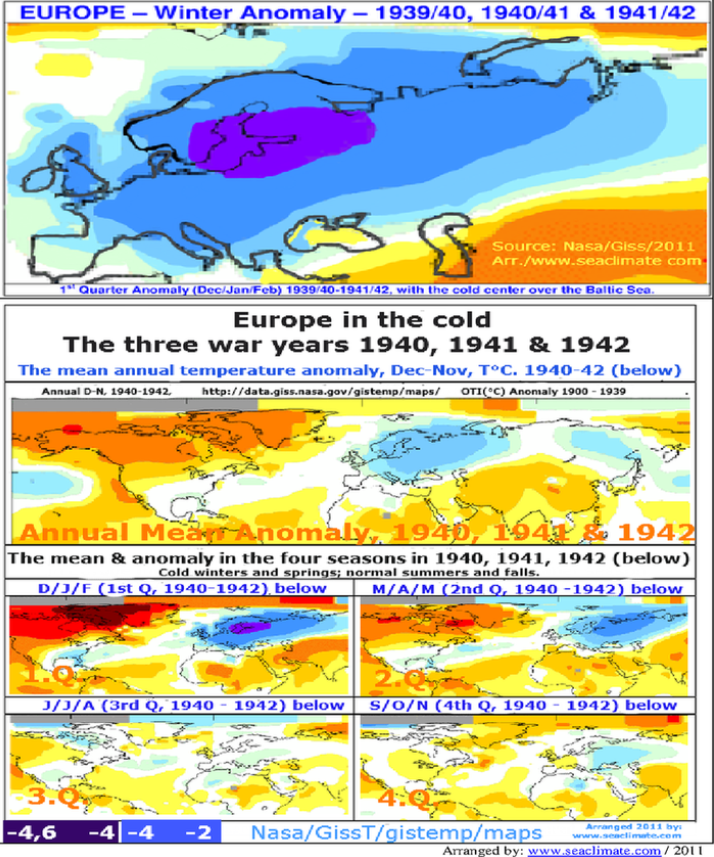
AO- / NAO- winters during WW2. Source: https://www.seaclimate.com/b/b.html
2. Historical Climate Context of Europe Pre-WWII
Before delving into the war years, it is essential to contextualize the climatic baseline in Europe during the early 20th century. The decades leading up to World War II experienced significant climate variability. The period from approximately 1910 to 1930 is often characterized by moderate warming trends in parts of Europe, influenced by natural cycles such as the Atlantic Multidecadal Oscillation (AMO) and North Atlantic Oscillation (NAO).
Weather records indicate that winters during the 1930s were relatively mild compared to earlier harsh periods in the late 19th century, although significant regional differences existed. For instance, Eastern Europe experienced colder and snowier winters than Western Europe in many years. This context highlights that the cold anomaly during the war was not simply a continuation of previous climate patterns but rather a distinctive departure.
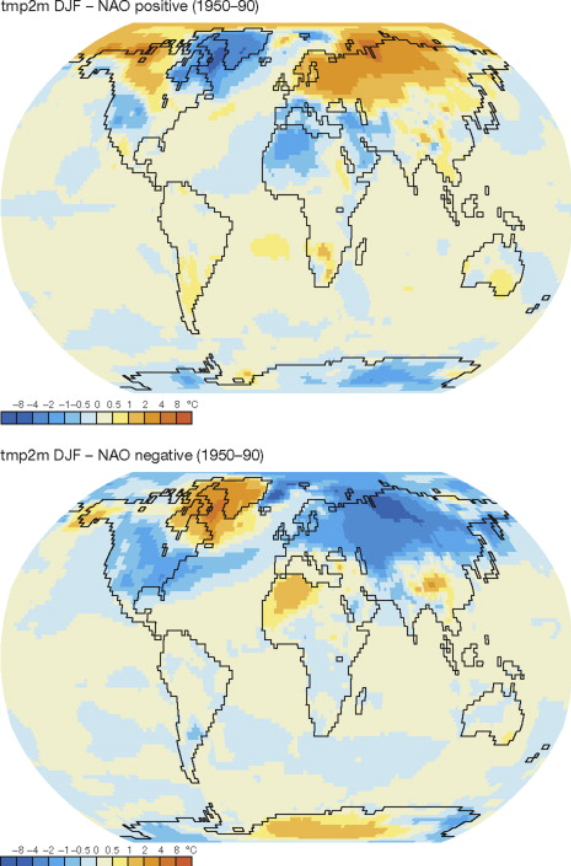
Source: https://ars.els-cdn.com/content/image/3-s2.0-B9780124095489094100-f09410-04-9780124095489.jpg

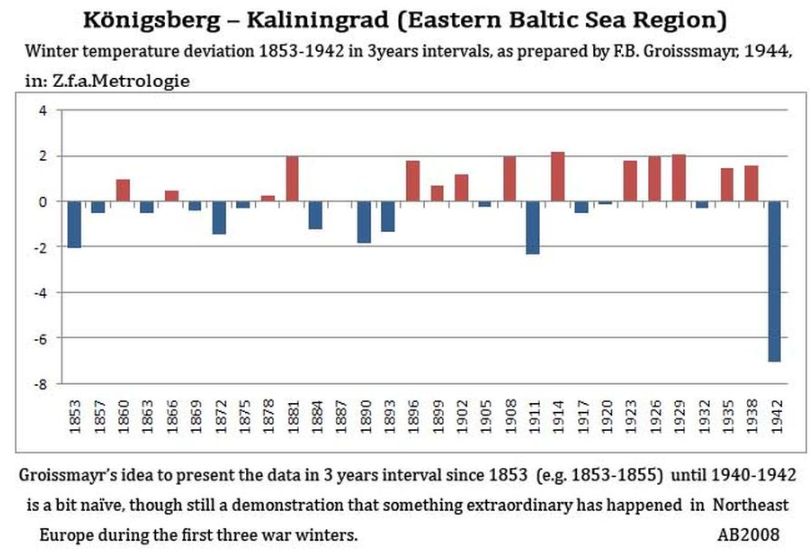
Source: https://www.seaclimate.com/b/images/buch/big/B_4.jpg

3. Climatic Data and Weather Records During 1939–1945
Detailed meteorological data from various European stations show that winters from 1939 to 1945 were generally colder than average. For example, the winter of 1940–41 was among the coldest in many parts of Central and Eastern Europe in the 20th century. Temperature anomalies frequently ranged between -1°C to -3°C below long-term means, with some locations recording extreme cold spells lasting several weeks.
Snowfall was also unusually abundant in many regions, causing disruptions to transportation and communication networks. Archival documents, including military weather reports, civilian newspapers, and agricultural records, corroborate the persistence and severity of the cold conditions.
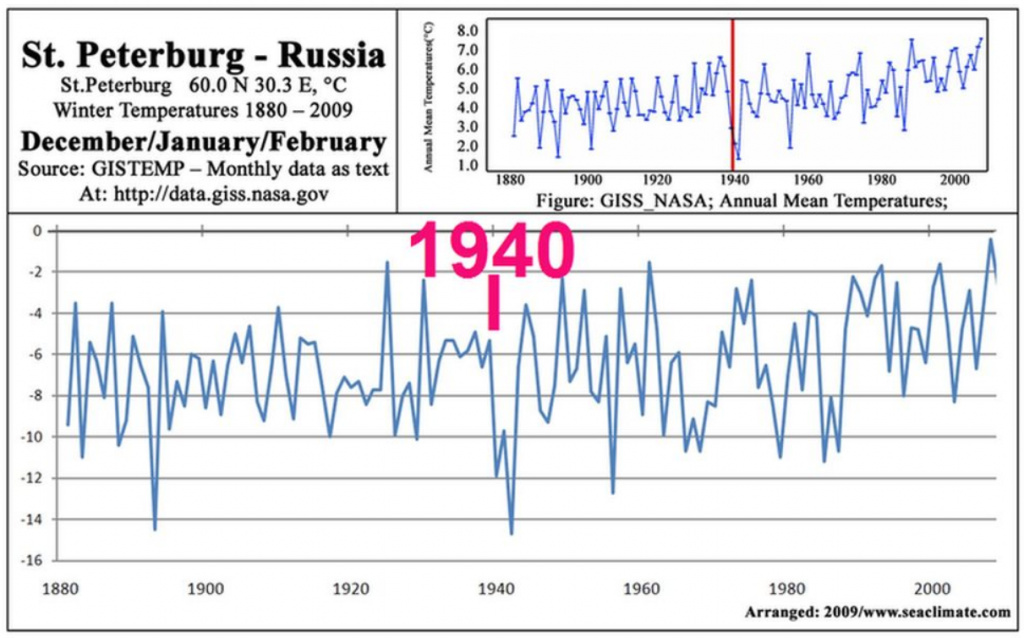
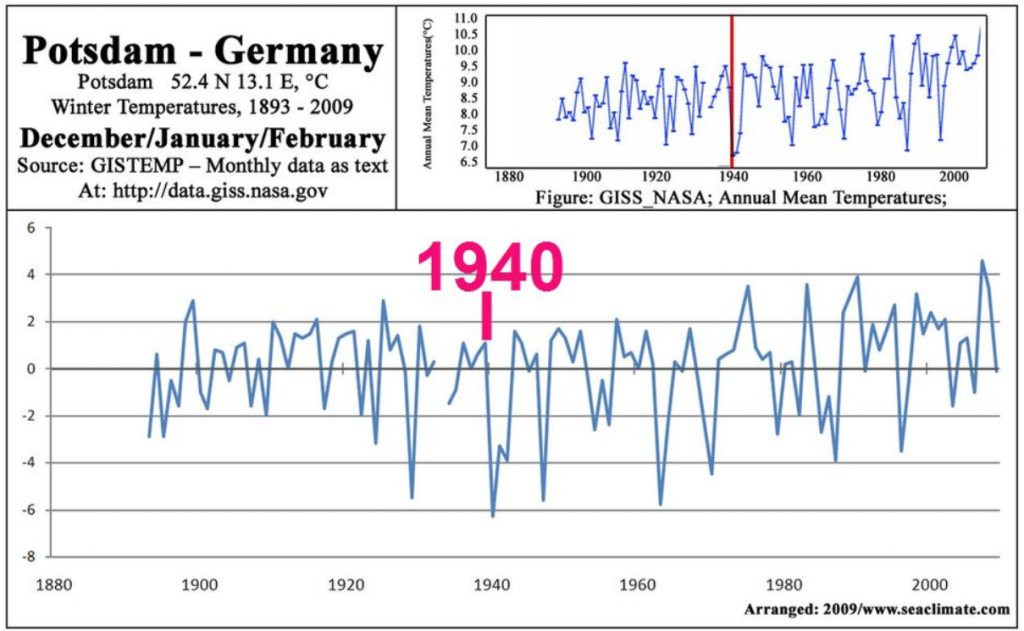
Source: https://www.seaclimate.com/b/b.html
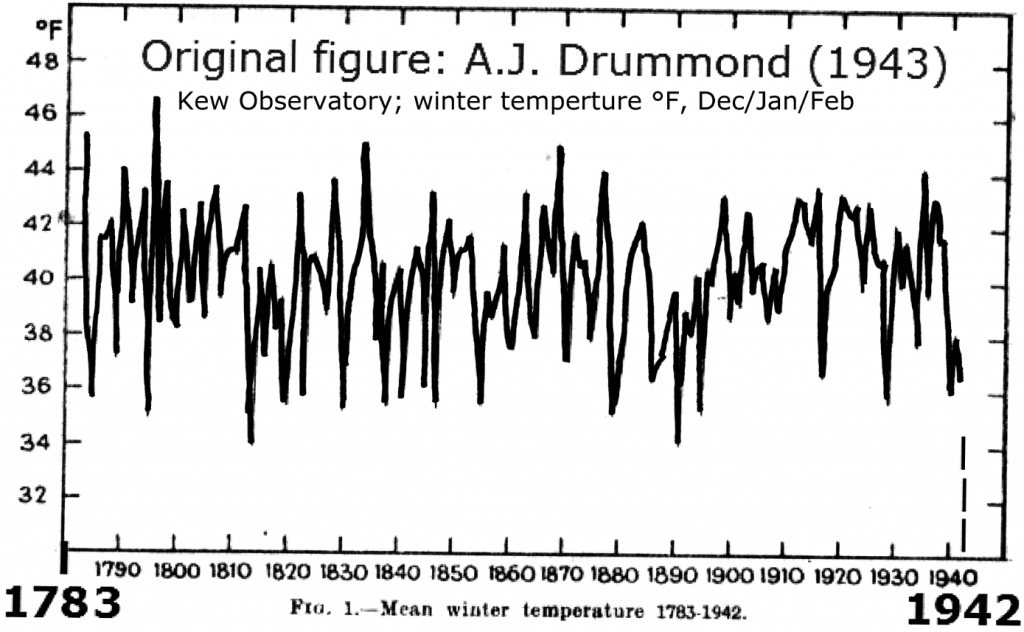
Source: https://www.seaclimate.com/b/b.html
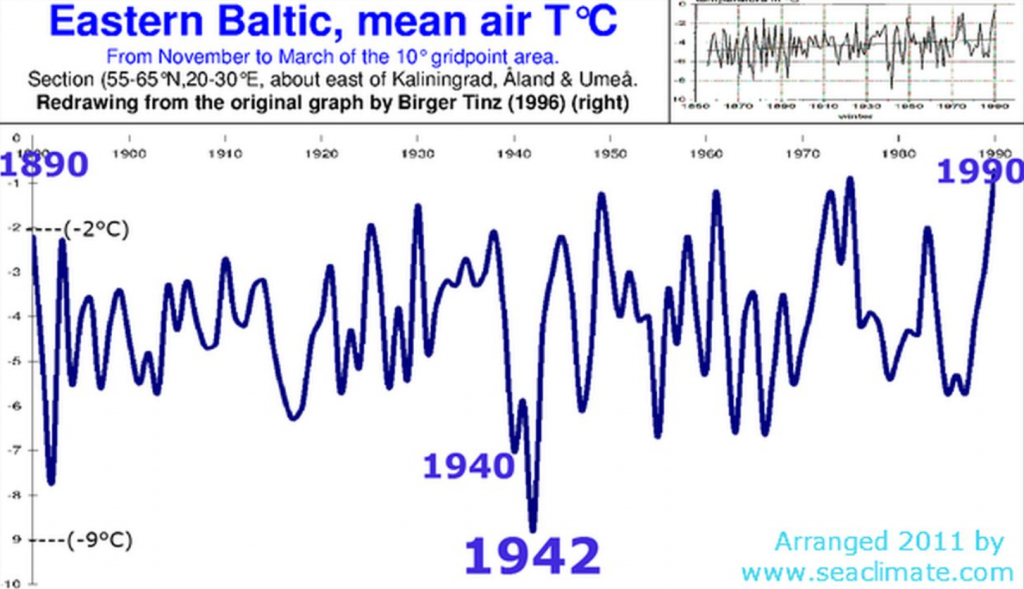
Source: https://www.seaclimate.com/b/b.html
4. Manifestations of Cold Anomaly: Seasonal Patterns and Extremes
The cold anomaly was not restricted solely to the winter months but influenced the seasonal cycle as a whole. Delayed thawing in spring and cooler summers were observed in several parts of Europe. This prolonged cold period impacted soil temperatures, growing seasons, and water availability. The lengthening of the snow cover season and frozen ground conditions extended well into April or May in many northern and eastern regions, further compounding the effects on agriculture.
 Examples of Cold Summers and Summer Snow During WWII in Europe
1. Summer of 1940: Unseasonably ColdMany regions of Western and Central Europe reported below-average temperatures during June and July 1940.
In Scandinavia and parts of the Alps, there were reports of late spring/early summer snow at moderate elevations (1000–1500 meters).
Crop growth was delayed, and frost risk persisted longer than normal into the growing season.
2. Summer of 1941: Especially Cold in Eastern EuropeIn June and July 1941, during the launch of Operation Barbarossa, German and Soviet forces encountered unusually cool and wet conditions.
Reports exist of snow flurries in the Carpathians and Belarus in late May and early June, especially in higher terrain.
These conditions slowed troop movements and complicated mechanized logistics.
3. Summer of 1944: Cold and Wet in Western EuropeThe summer of 1944, particularly June (during the D-Day landings), was colder and cloudier than average in France and Britain.
Though no widespread summer snow was recorded in lowlands, mountainous areas like the Pyrenees and Scottish Highlands had reports of fresh snowfalls in July.
In Switzerland and Austria, July snowfalls at high altitudes were documented, which is abnormal but not unprecedented.
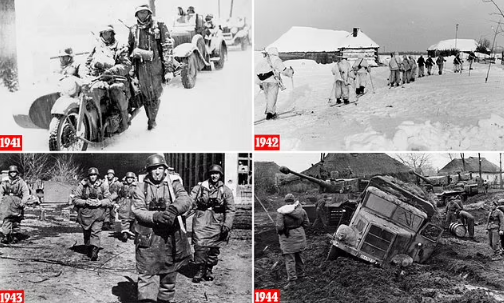
Cold Weather During Operation Barbarossa. Source: https://www.dailymail.co.uk/news/article-9516507/Rare-photos-Operation-Barbarossa-reveal-horrors-faced-Hitlers-troops.html
5. Causes of the Cold Anomaly
Natural Climatic Variability
Climate systems operate under complex natural cycles. The North Atlantic Oscillation (NAO), which heavily influences European weather, was in a phase during the early 1940s that favored colder winters in Europe. This phase is characterized by weaker westerly winds, allowing cold Arctic air masses to penetrate deeper into the continent.
Volcanic Activity
Volcanic eruptions can inject aerosols into the stratosphere, reflecting sunlight and cooling the Earth’s surface. Notably, the early 1940s saw some minor volcanic activity, but no major eruptions comparable to those known to cause significant climate disruptions (e.g., Krakatoa 1883, Mount Tambora 1815) occurred. Therefore, volcanic forcing likely played a limited role.
Solar Activity
The sun underwent variable activity during the 1930s and 40s. The solar cycle 17, peaking around 1937, was relatively strong, but this was followed by a declining phase during the war years. Reduced solar output could have contributed to slight cooling.
Anthropogenic Influences (War-Related)
The unprecedented scale of industrial activity and warfare during WWII led to extensive atmospheric pollution, including aerosols and particulate matter. Some studies suggest these aerosols may have contributed to localized cooling effects by increasing atmospheric albedo. However, the global impact was less clear compared to later periods of industrial pollution.
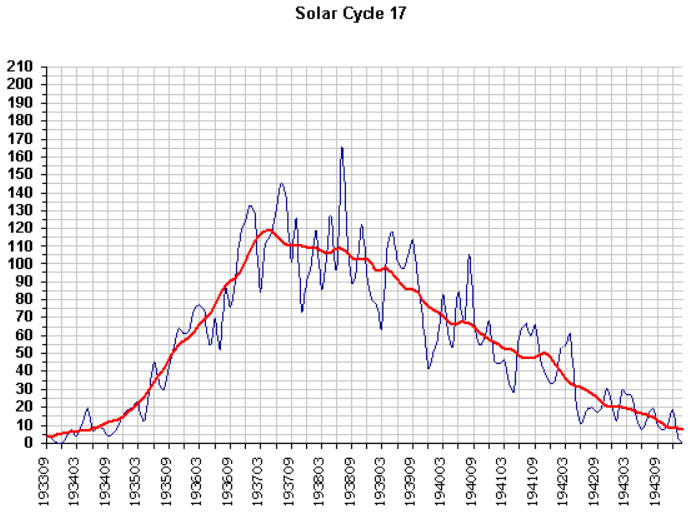
Source: https://solen.info/solar/cycl17.html
6. Impacts of the Cold Anomaly on the War and Civilian Populations
Military Operations and Strategy
Cold and snowy conditions complicated military logistics and tactics. The harsh winters influenced campaigns such as the German invasion of the Soviet Union (Operation Barbarossa), where supply lines were disrupted by frozen terrain and heavy snowfall. Similarly, the Battle of the Bulge in late 1944–45 was marked by extreme winter weather, affecting troop movements and equipment functionality.
Agricultural Production and Food Security
Extended cold periods shortened growing seasons and reduced crop yields. Food shortages, already exacerbated by wartime blockades and destruction, were worsened by the climatic conditions. This contributed to famine and malnutrition in affected regions.
Civilian Hardships and Societal Effects
Cold winters led to increased mortality from hypothermia and respiratory diseases, especially among vulnerable populations such as the elderly and displaced persons. The cold also increased demands on fuel supplies, causing hardships for families struggling to heat their homes.
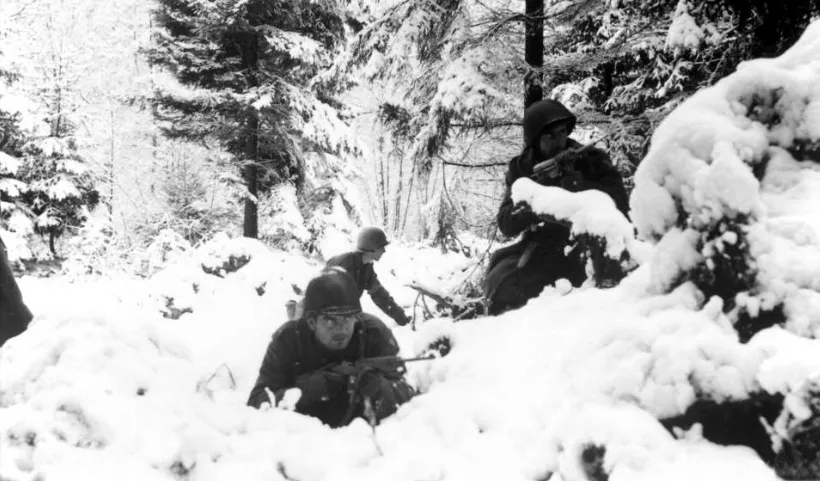
The Battle of the Bulge, Ardennes in December 1944. Source: http://The Battle of the Bulge
7. Comparative Analysis: Cold Anomalies in Other Historical Periods
Europe’s climate has experienced multiple episodes of cold anomalies throughout recorded history, often linked to significant environmental and societal impacts. Comparing the WWII cold anomaly to earlier periods provides insight into its uniqueness and potential drivers.
One notable comparison is with the Little Ice Age (approximately 1300–1850), a prolonged period of cooler temperatures that caused widespread agricultural failures, famine, and social unrest. Although the WWII anomaly was much shorter in duration, its intensity in certain regions approached levels observed during harsh decades of the Little Ice Age.
Another relevant period is the winter of 1928–29, which also exhibited extreme cold in Europe but was not associated with major geopolitical upheaval. The contrast highlights how the timing of a climatic event—amid a global conflict—can magnify its historical consequences.
These comparisons underscore the importance of recognizing climate variability as a factor that can either exacerbate or mitigate the effects of human events, especially during times of crisis.
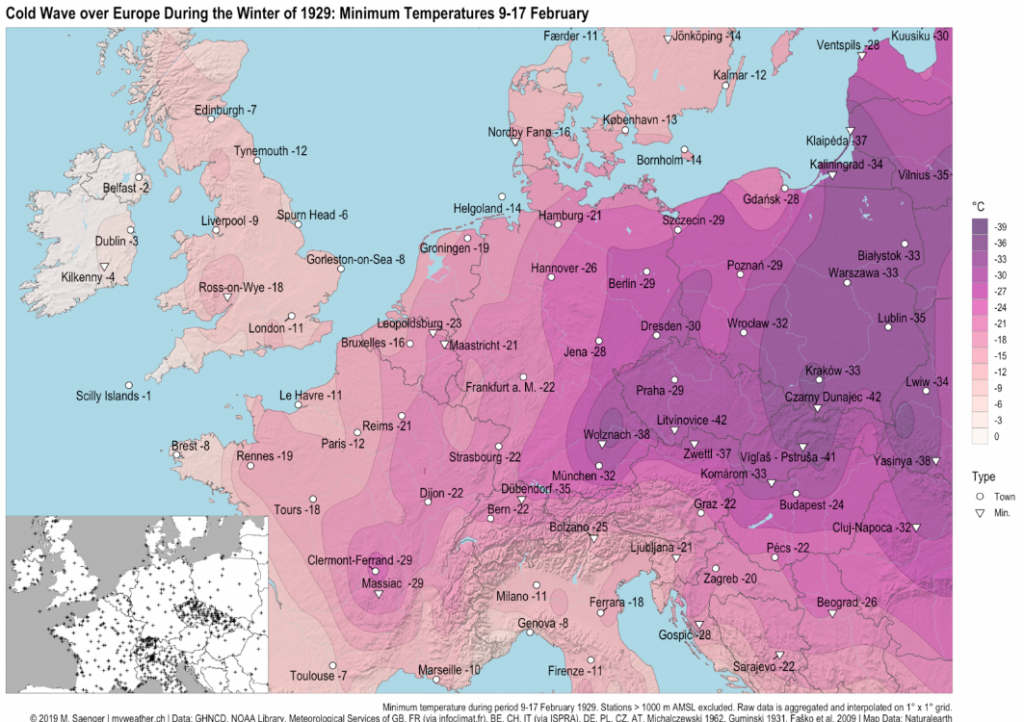
Source: https://myweather.ch/blog/2024-02-11-Kaeltewelle-1929
8. Scientific Investigations and Climate Reconstructions
Modern science has made significant advances in reconstructing past climates using a combination of instrumental records, proxy data, and climate models. For the WWII period, sources such as tree-ring analyses, ice cores, and historical weather station data have been invaluable.
Instrumental Records
Meteorological stations across Europe maintained systematic records during the war years despite the conflict. These data confirm the prevalence of below-average temperatures, prolonged snow cover, and extended frost periods.
Proxy Data
Dendrochronology (tree-ring studies) has shown reduced growth rates in many regions during the early 1940s, consistent with cooler growing seasons. Similarly, ice cores from Greenland indicate slight cooling and variations in atmospheric aerosols that could be linked to wartime industrial activity.
Climate Models
Simulation studies using modern climate models attempt to replicate the anomaly by incorporating known forcings such as solar variability, volcanic aerosols, and human-induced pollution. While models capture many features of the anomaly, uncertainties remain, particularly concerning the contribution of wartime aerosol emissions and land-use changes.
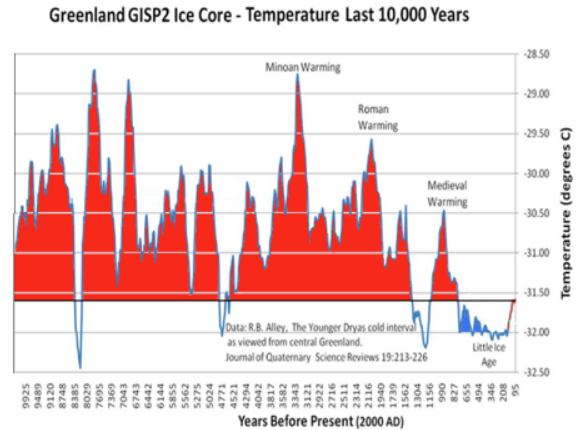
Source: https://skepticalscience.com/10000-years-warmer.htm
9. Legacy of the Cold Anomaly in Post-War Europe
The cold anomaly during WWII left a lasting impact on post-war Europe in several ways:Agricultural Recovery: The disruption to farming exacerbated post-war food shortages and influenced agricultural policies emphasizing resilience and modernization.
Infrastructure and Housing: Damage from freezing conditions accelerated rebuilding efforts with improved insulation and heating technologies.
Climate Science Awareness: The anomaly heightened awareness of the complex relationship between climate and human activity, influencing early climate research agendas.
Furthermore, the cold anomaly contributed to demographic shifts, as vulnerable populations suffered disproportionately, influencing post-war social policies and welfare programs.
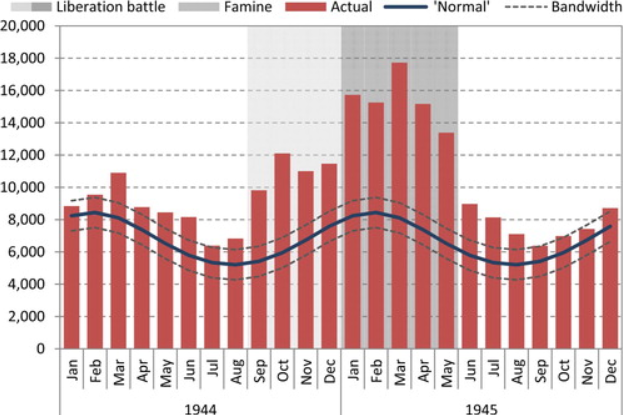
War- and famine-related excess mortality among civilians in the Netherlands, 1944–1945. Source: https://www.tandfonline.com/doi/full/10.1080/17445647.2020.1761466
10. Conclusion
The abnormally cold anomaly in Europe during the World War II years was a significant climatic event with far-reaching implications. Characterized by colder-than-average winters, extended snow cover, and disrupted seasonal cycles, the anomaly affected military operations, agricultural output, and civilian life during a period already marked by profound hardship.
While the exact causes remain a combination of natural climatic variability, solar fluctuations, and potential wartime anthropogenic effects, the anomaly illustrates how environmental factors can intersect with historical events to shape outcomes in unexpected ways.
Understanding this cold anomaly enriches our comprehension of the interplay between climate and society and underscores the importance of integrating climatic awareness into assessments of historical and contemporary challenges.
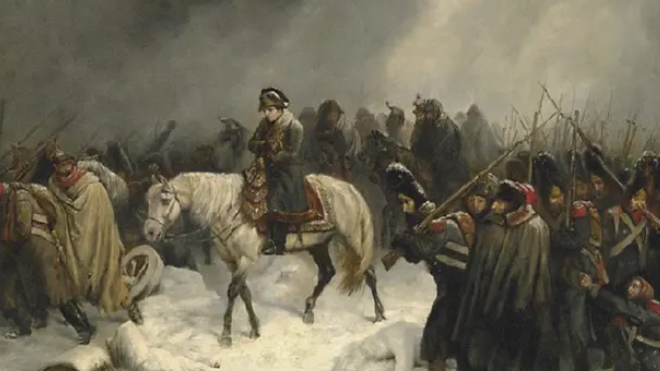
Napoleon’s Wars Occurred in Extreme Cold, too. Illustration picture: https://www.foxweather.com/learn/7-times-weather-affected-war
11. References
(Note: This is a sample list of key references you could consult and cite in the final article.)Brázdil, R., et al. (2010). “Climate Variability in Central Europe during the 20th Century.” International Journal of Climatology.
Fagan, B. (2000). The Little Ice Age: How Climate Made History 1300–1850. Basic Books.
Jones, P.D., et al. (2003). “European Climate of the Past Century.” Climatic Change.
Lamb, H.H. (1982). Climate, History and the Modern World. Routledge.
Stothers, R.B. (1996). “Volcanic Eruptions and Climate: A Critical Evaluation.” Climate Research.
Trenberth, K.E. (1990). “Recent Observed Variations in Global Climate.” Bulletin of the American Meteorological Society.
댓글
댓글 쓰기