Off to Africa, outgoing climate change envoy aims to spread gospel of Israel’s green tech
Off to Africa, outgoing climate change envoy aims to spread gospel of Israel’s green tech
Dressed for the part: Wearing an African shirt, Ambassador Gideon Behar enjoys homegrown produce in his garden. (Courtesy)

Few figures in Israel’s environment and climate scene are as energetic, ubiquitous, diplomatic and positive as Gideon Behar, who is wrapping up more than five years as the country’s special envoy for climate change and sustainability under the auspices of the Foreign Ministry.
Behar has not only greened up the ministry — installing solar panels and a beehive on the roof, and banning disposable cups and cutlery — he’s traveled the length and breadth of Israel lecturing about climate change to members of the government, local councils and anyone who will listen.
He has also played a key role in forging regional relationships on environmental issues and has upgraded Israel’s presence at the most important international climate conference, the UN COP, pushing Israeli climate tech as a beacon that can help save the planet.
On August 14, he set off for Nairobi to serve as Ambassador to Kenya, Uganda, Tanzania, Malawi and the Seychelles.
He is replaced as climate envoy by Raphael (Rafi) Singer, the outgoing head of economy and trade at the Israeli Embassy in Rome.
Adding Swahili to the seven languages he already knows (which include Wolof, spoken in Senegal, where he was ambassador from 2006-2011), Behar says the new posting will combine two of his great passions — the African continent and the environment.
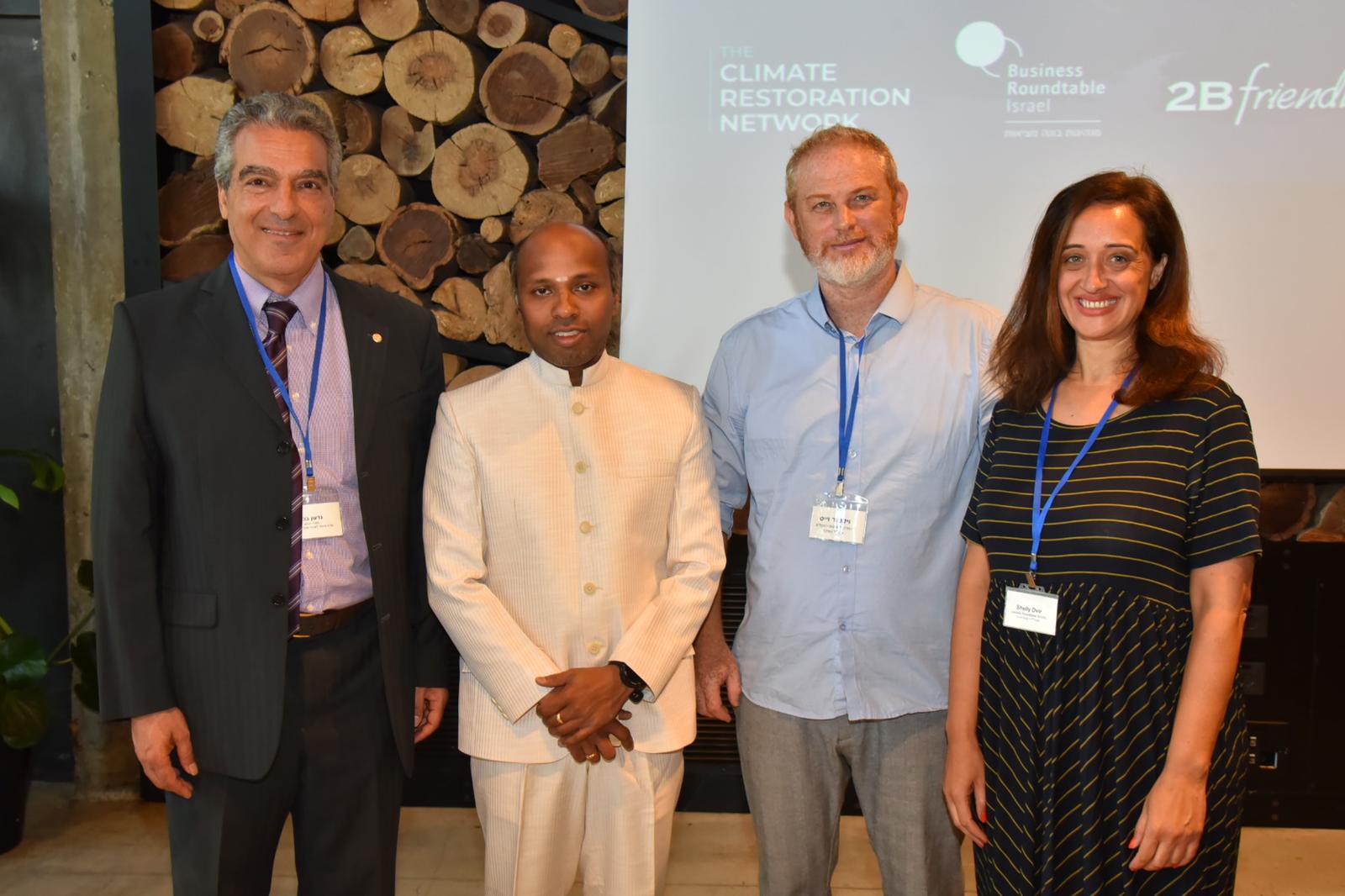
From left: Gideon Behar, Perumal Arumugam of the UNFCCC, Victor Weiss, co-director of the Center for Climate Rehabilitation and Shelly Dvir, deputy director of Business Roundtable Israel, at Israel’s first conference on carbon sequestration, Shefayim, June 30, 2022. (Foreign Ministry)
The final appointment Behar took at the Foreign Ministry was an interview with The Times of Israel, which has been edited for clarity and length.
I’ve interviewed you many times, but never asked what brought you into the climate field.
I’ve loved nature since I was a boy. I would collect trash on school trips and grow vegetables outside the building.
As ambassador to Senegal, I led a major project in drip irrigation with MASHAV (Israel’s Agency for International Development Cooperation) to reduce dependence on the rains. I saw how pronounced phenomena like desertification and biodiversity loss were.
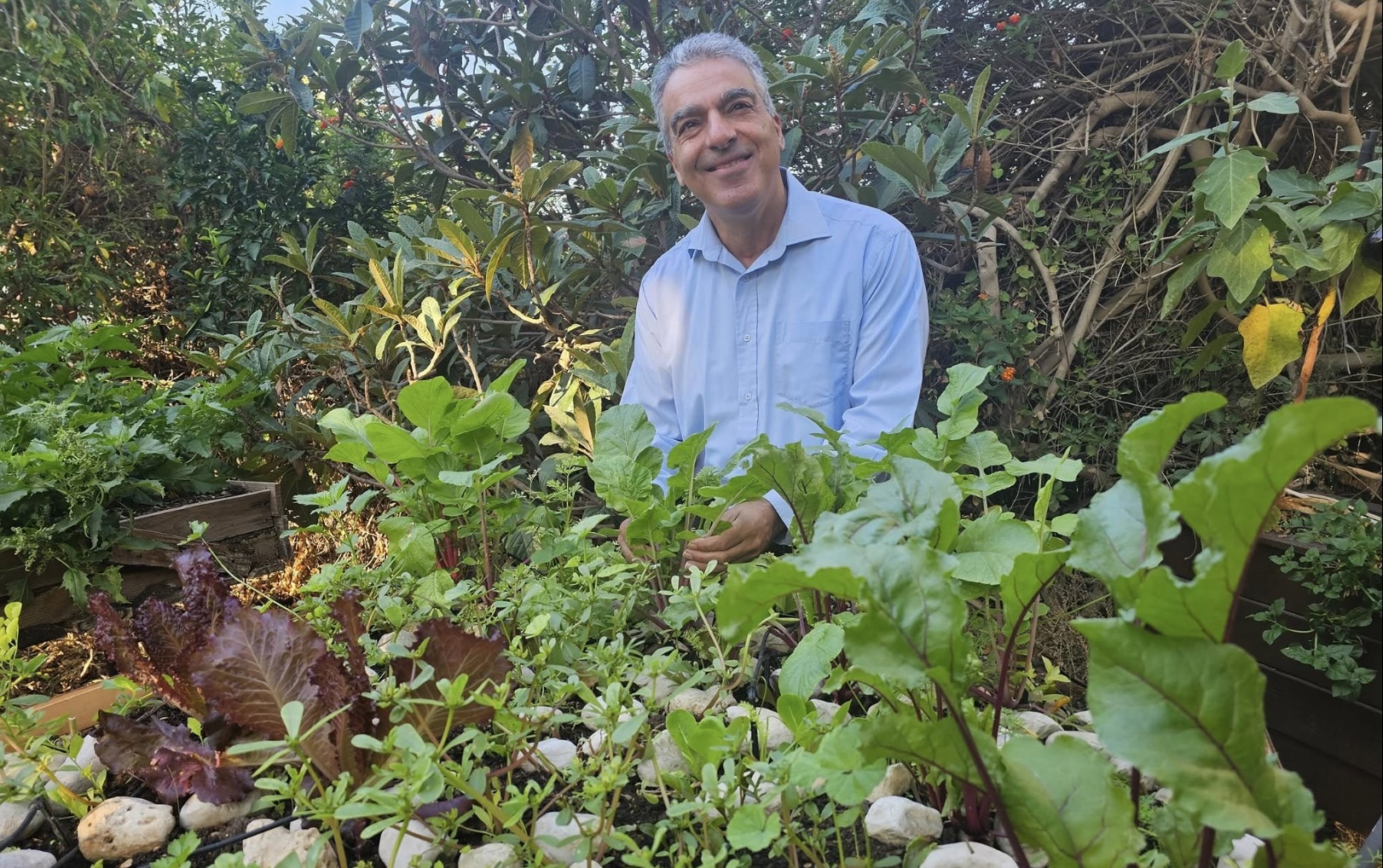
Ambassador Gideon Behar at home with his vegetables. (Courtesy)
When I hit 50, I asked myself what I wanted to do in life and concluded that climate change was where I wanted to contribute — in the town where I live, in Israel, and in the world. I suggested the post of special climate envoy, and the Foreign Ministry accepted it. I wasn’t the first — Yaakov Hadas did it for two years. I developed the role when I started in December 2019. I already had a deep knowledge of climate change and what needed to be done.
What have you focused on as climate envoy?
I’ve invested a lot of my time explaining to government, municipalities and the public what climate change is, how it threatens us, and what we need to do. I’ve worked a lot with the Education Ministry, and have given many dozens of lectures to teachers and pupils.
I also asked how Israel as a country could help in the struggle against climate change, and the answer was through practical, scalable solutions.
Israel was created under difficult circumstances of desert and water shortages, and nevertheless succeeded
Israel was created under difficult circumstances of desert and water shortages, and nevertheless succeeded. The world badly needs Israel’s experience. Over the years, people have forgotten that Israel pioneered solar panels for water boilers. Today, we have lots of start-ups and companies dealing with solar energy, energy efficiency and energy storage.
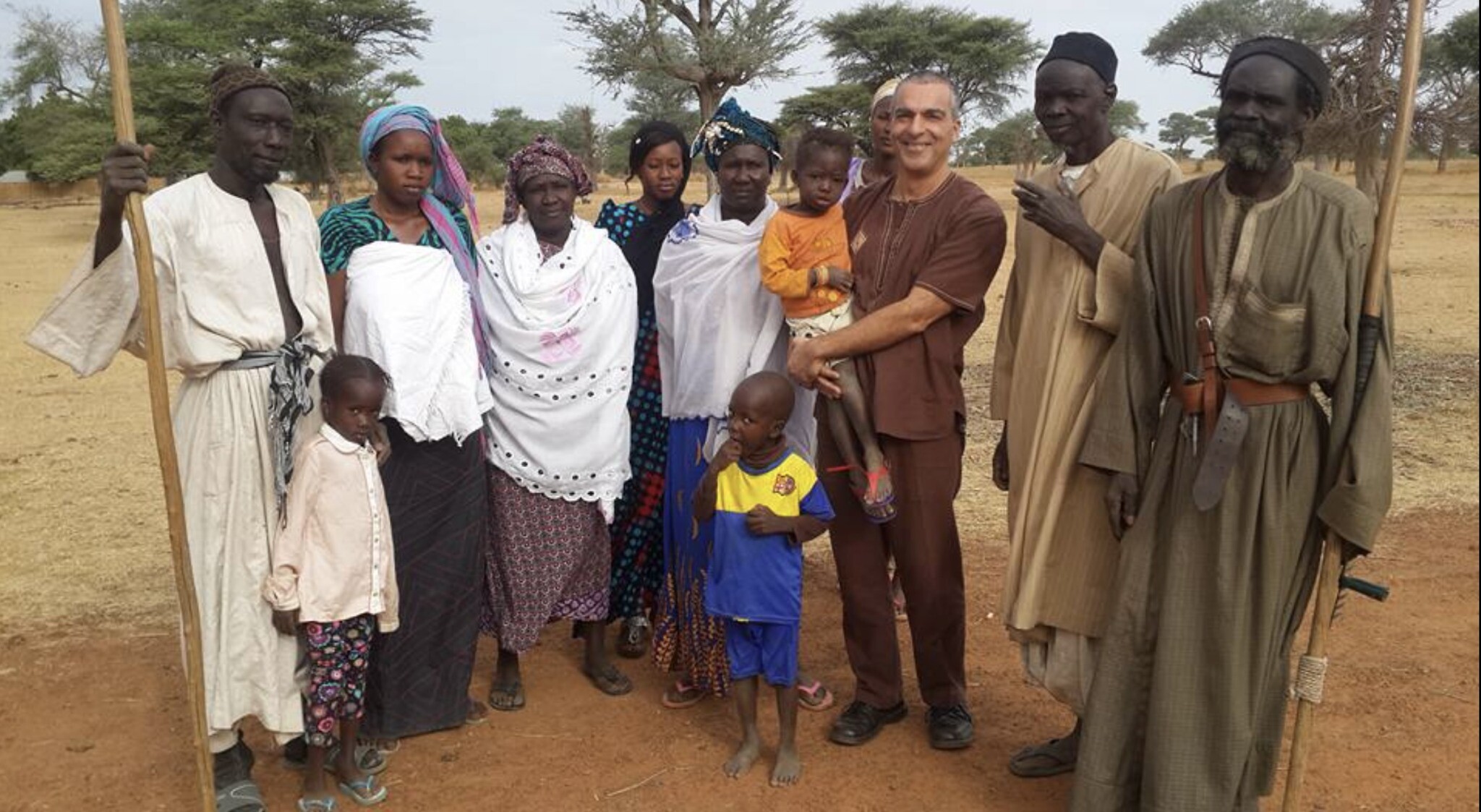
Ambassador Gideon Behar poses with farmers in Senegal trained by MASHAV to use drip irrigation, 2017. (Courtesy)
We excel in water. Our great inventions include drip irrigation and reverse osmosis, used in desalination. Israel is the only country in the world with a circular water economy. The cities use desalinated water, which is then treated and purified, and 90% of it is used in agriculture. It’s a model for the world. Israel is a living example of climate innovation and how to survive in harsh climatic conditions, which are becoming more relevant across the globe.
We also see how Israel encourages R&D in fields such as agrovoltaics (where solar panels generate power while helping crops to grow) and hydrogen technology.
You have been active regionally, in the Eastern Mediterranean & Middle East Climate Change Initiative led by Cyprus, for example. Can you give some details?
Regional climate resilience is so important. The Middle East and North Africa are confronting the worst droughts in memory. I think that the years 2024 -2025 will mark a historical turning point during which extreme events such as heatwaves and floods pound the world as never before. The only way to build resilience is for the region to cooperate.
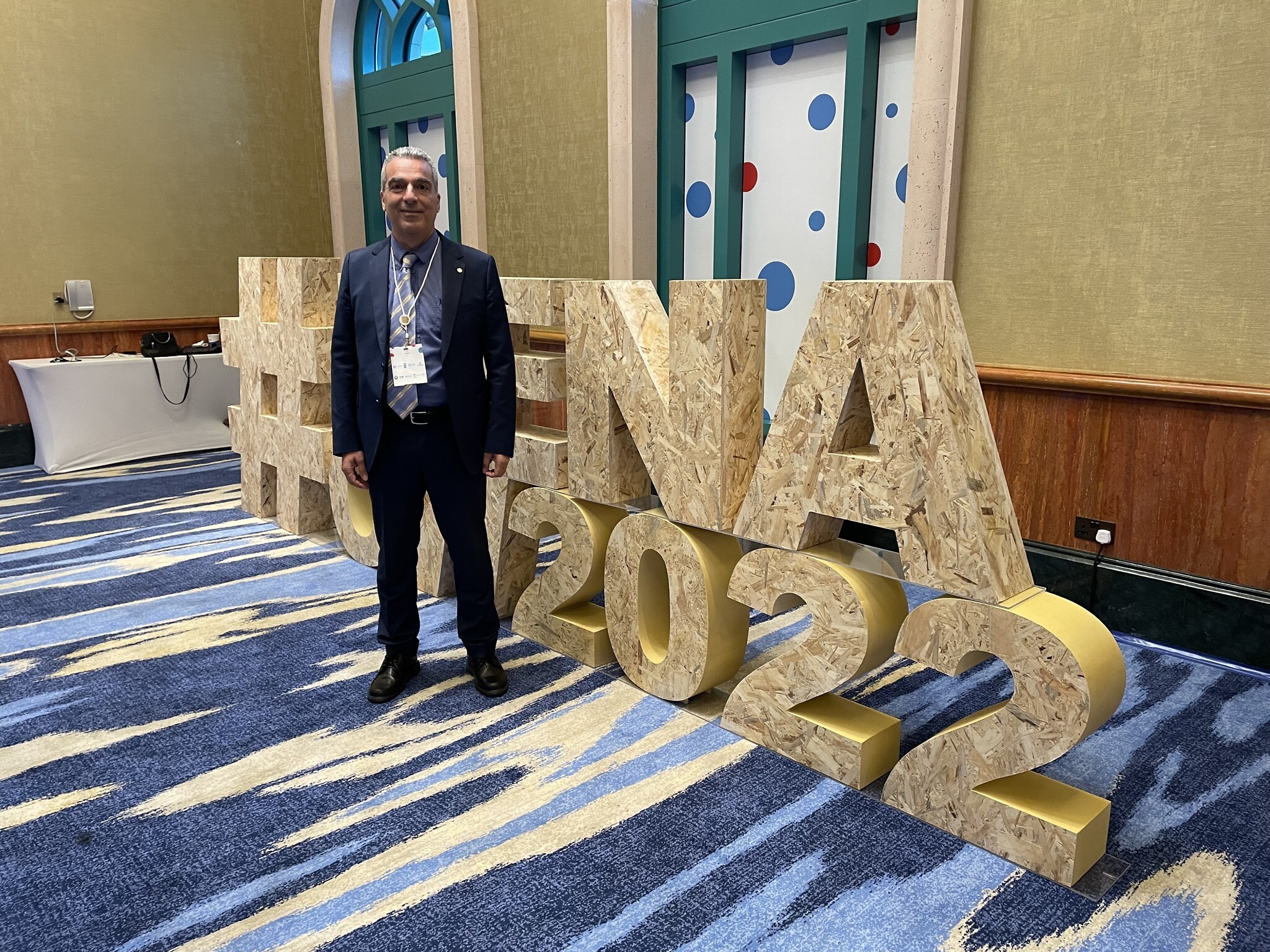
Israel’s special envoy on climate change, Ambassador Gideon Behar, at the first-ever UN Middle East and North Africa regional conference in Dubai, United Arab Emirates, March 28, 2022. (Sue Surkes/Times of Israel)
In 2011, the Syrian civil war broke out, largely due to a prolonged drought. This year, it’s even worse. We know that climate change is a risk multiplier, increasing dangers in states where central governments are weak, such as those in the Middle East. We are likely to see displacement and volatility.
How has Israel’s war against Hamas in Gaza affected regional connections? For example, a US-brokered plan for the UAE to build solar fields in Jordan to supply Israel with power, and desalination stations in Israel to give Jordan more water, is frozen.
I can’t say what contacts there are behind the scenes. I can say there are fewer contacts. But we see the need and understand the importance. [Israel’s] vision is to use climate change and environmental issues as bridges for regional peace.
Climate change is a risk multiplier, increasing dangers in states where central governments are weak
There have been many adverse reports, from the State Comptroller’s Office to the OECD, about Israel’s failure to cut global warming emissions. Where are the country’s key successes and failures?
It’s important to remember that great things have been done in Israel in areas such as water, renewable energy, and reforestation. That we have water in our taps when the countries around us have almost none means we’ve done something right. We eat local produce, don’t import everything, and have no food shortages. We have electricity 24/7, unlike many of our neighbors. For many countries in the world, there’s a lot to take from Israel in these fields.
But we do need to be more ambitious on mitigation (reducing emissions) and adaptation to climate change.
Remember that climate change is dynamic and develops surprisingly. Every time you think you’re ready, something else happens, such as more sandstorms.
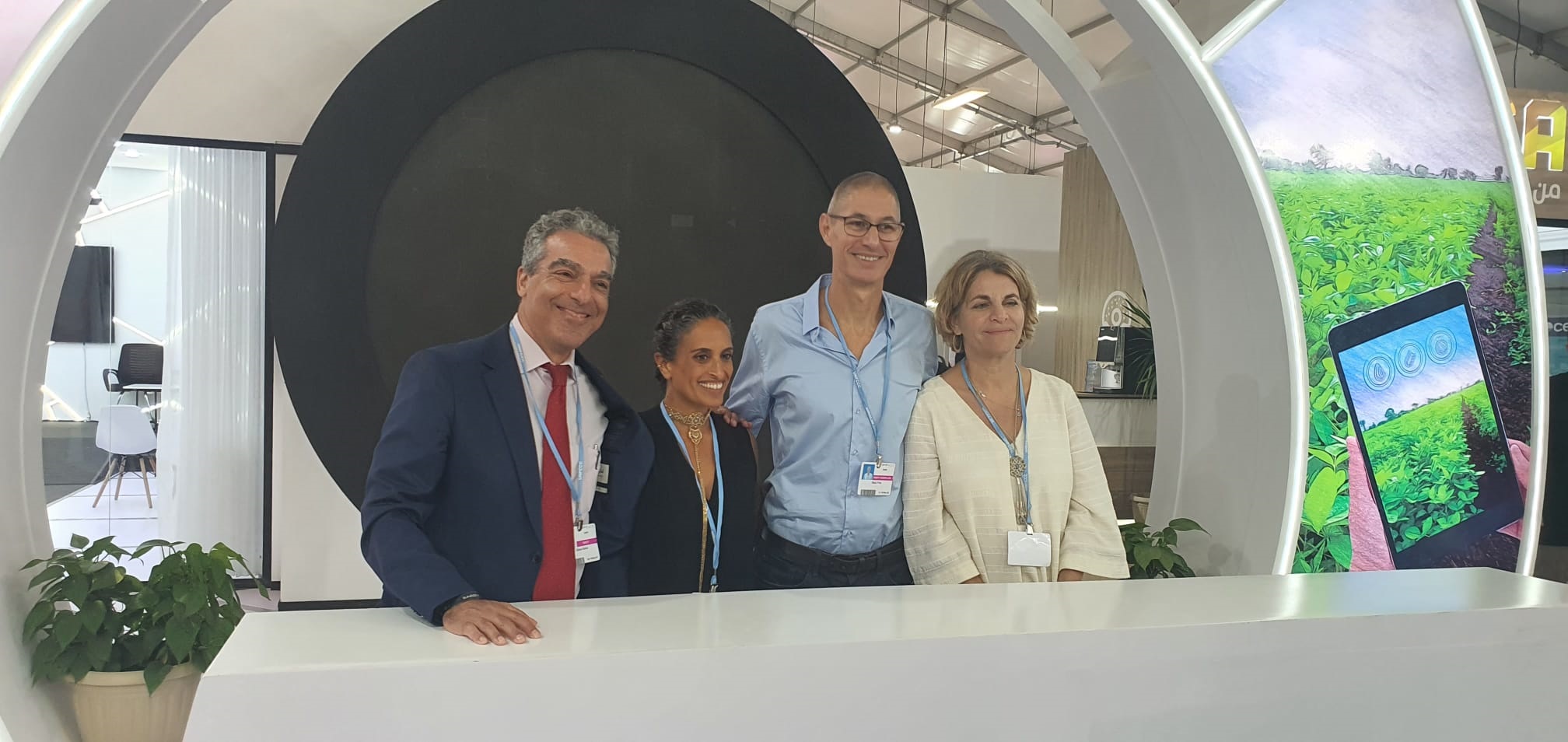
From left: Foreign Ministry Special Climate Envoy Ambassador Gideon Behar, singer-songwriter and activist Ahinoam Nini, coral expert Prof. Maoz Fine of the Interuniversity Institute for Marine Sciences in Eilat in southern Israel, and Israel’s Ambassador to Egypt, Amira Oron, at the Israel pavilion, COP27, Sharm el-Sheikh, Egypt. (Courtesy, Gideon Behar)
You have represented Israel at several annual COP United Nations climate conferences and overseen Israel’s first conference pavilions. Many critics say these gatherings are all talk and no action — do you think they are still worthwhile?
To stay relevant, they have to be more practical, make clearer decisions, and keep politics out. Working together isn’t simple or intuitive, and it’s sad that global emissions are only rising. But you can’t solve the climate problems without international cooperation.
What are your goals in Africa?
A lot of my work will be in international development, together with MASHAV. I’ll also work with and try to open doors for the many Israeli civil society organizations that have started working in Africa over the past decade.
My two loves are Africa and the environment, and I’ll be lucky to be able to combine the two.
대화 참여하기