
An unprecedented paleontological discovery has emerged from the depths of time in southern New Zealand. Researchers have identified the first bee fossil found in Zealandia, the ancient continent that is now almost entirely submerged around New Zealand. The specimen belongs to Leioproctus (Otagocolletes) barrydonovani, a newly identified bee subspecies that lived approximately 14.6 million years ago during the Middle Miocene.
The fossil was discovered at the Hindon Maar site, an exceptional paleontological location in the Otago region of southern New Zealand. This site, characterized by its ancient lake deposits, has preserved remains of fauna and flora in remarkable detail, allowing scientists to reconstruct the ecosystems that thrived in Zealandia during the Miocene period.
The specimen, described by researchers Michael S. Engel and Uwe Kaulfuss in the journal Zoosystema, consists of a nearly complete dorsal impression of the bee, enabling a precise analysis of its morphology. This fossil sheds light on the diversity and antiquity of bees in New Zealand, challenging the belief that these insects arrived in the region more recently.
Although bees are the primary pollinators in many ecosystems worldwide, their presence in New Zealand has historically been limited. To date, only 42 species have been recorded, 28 of which are endemic. The absence of a fossil record has made it difficult to study their evolution in the region, making this discovery a key piece in understanding the development of the local melittological fauna.
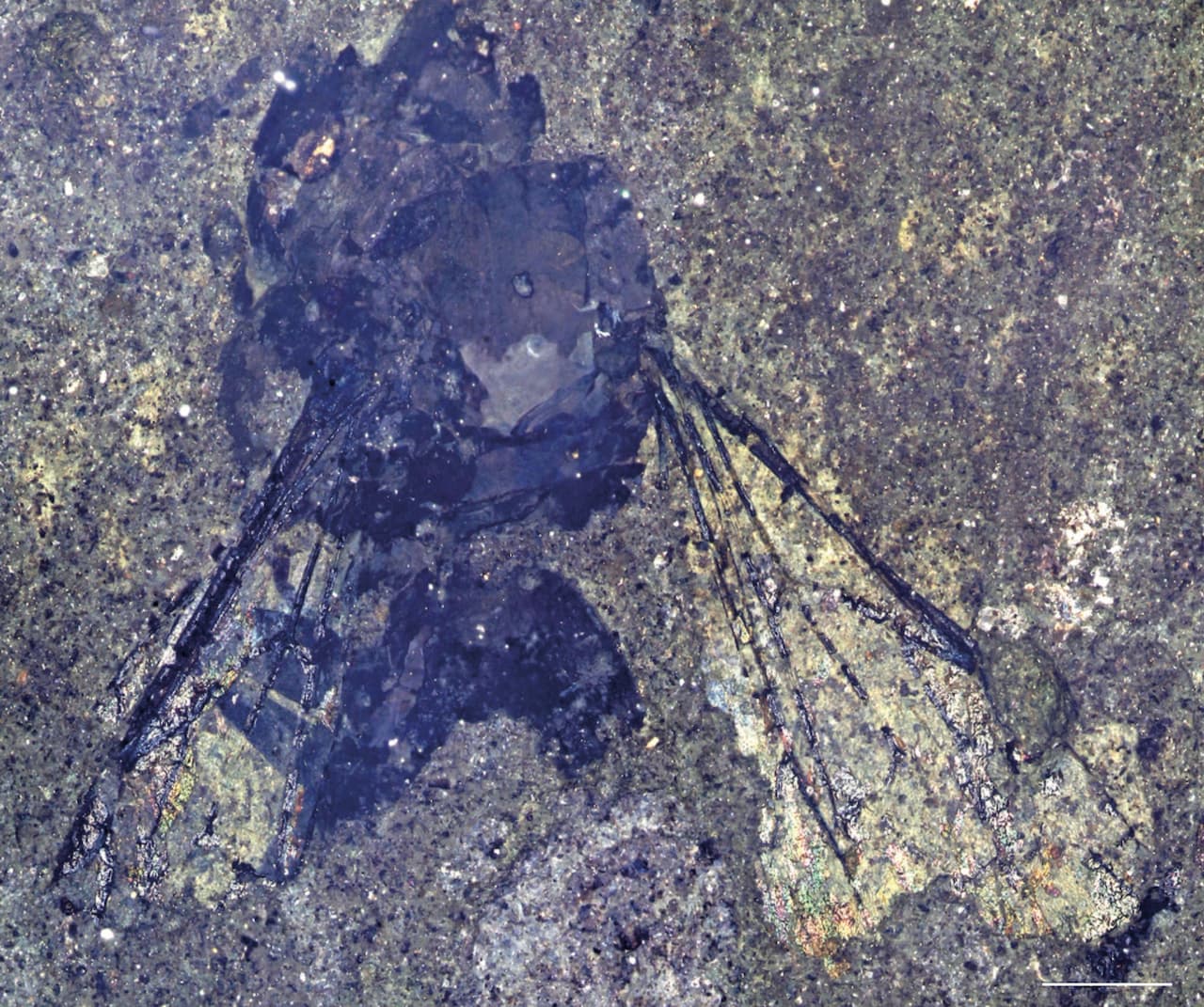
Geological analyses of the Hindon Maar site have determined that during the Middle Miocene, the region was covered by Nothofagus and podocarp forests, with a high diversity of broadleaf flora. In this context, the bee Leioproctus (Otagocolletes) barrydonovani may have played a crucial role in pollinating plants such as Pseudopanax, a species in the Araliaceae family that remains common in New Zealand today.
This ecosystem was significantly different from the present, as Earth was experiencing the Middle Miocene Climate Optimum, a period characterized by higher temperatures and greater forest coverage. The conditions of the volcanic lakes at Hindon Maar allowed for the exceptional preservation of the fossil, preventing its degradation over millions of years.
If this bee represents an early evolutionary lineage of the Leioproctus genus, then a much greater diversification may have existed in the past, with species that later disappeared due to climate changes or competition with introduced species. Alternatively, the fossil may indicate the presence of multiple independent invasions of the Leioproctus genus at different points in New Zealand’s history.
To answer these questions, scientists plan to conduct further excavations at the Hindon Maar site and other paleontological locations in the region. Additionally, the analysis of fossilized pollen from the area could provide more clues about interactions between bees and plants during the Miocene.
The newly identified species, Leioproctus (Otagocolletes) barrydonovani, was named in honor of the late Barry J. Donovan, a distinguished New Zealand entomologist who dedicated his career to studying the country’s native bees. His work was fundamental to understanding the biodiversity of these insects in the region, and his legacy continues to inspire new research in paleontology and ecology.
SOURCES
Michael S. Engel and Uwe Kaulfuss, A bee from the middle Miocene Hindon Maar of southern New Zealand (Hymenoptera, Colletidae), Zoosystema 47(3), 43-49, (29 January 2025). doi.org/10.5252/zoosystema2025v47a3
대화 참여하기