기본 콘텐츠로 건너뛰기

HEADLINE DESK

DKBEE.COM 최신 주요 리포트

최신 기사를 불러오는 중입니다...

LATEST INSIGHTS

분야별 심층 분석

What is the future of honey in the face of globalised neoliberal trade policies and climate change?


What is the future of honey in the face of globalised neoliberal trade policies and climate change?


Honey seems to be coming full circle in its popularity. Although sugar displaced it in the cuisines of modern cultures in the last three to four centuries, it never completely lost its associations with health, medicine, religion and ritual practices that were so prevalent in numerous ancient and early cultures. As often happens, many of those associations survived as folk practices that are now being validated by science. Meanwhile, individuals and groups throughout the world kept up traditions of beekeeping and harvesting honey from the wild, and various social and cultural movements, particularly indebted to the awareness of the interconnected nature of changes to the natural environment, the production of foodstuffs and support for locally sourced work, are supporting a renewed interest in honey.

Concerns about the industrial food system and food safety, philosophical challenges to the dominance of Western attitudes towards food (and life in general), political challenges to free-market capitalism, and the turn towards holistic and natural lifestyles, as well as the expansion of global palates to a more adventurous desire for new tastes, are all contributing to a renewed respect for honey, encouraging people to consume more of it. The shrinking of the world through new media, technologies and increased mobility also means that the wide range of the many honeys’ varied flavours is now known and available. This piques people’s curiosity, and feeds into an appreciation – and willingness to pay – for speciality honeys as well as for local honeys produced on a smaller and more personal scale. The renewed interest in honey can even be attributed to a rootlessness that seems pandemic in the modern globalised world and that is perhaps eased by consuming foods with strong ties to specific regions, offering eaters a taste of place (terroir) that then gives psychological or spiritual grounding.

Unfortunately, there are now concerns about the safety and quality of commercially distributed honey as well as the future of honeybee colonies, and thus of honey production. Disease, pests, mites, loss of habitat, pesticides (particularly neonicotinoids), monocrop agriculture, climate change and the influx of other varieties of bees are threatening colonies in the US and internationally. In 2006–7, American beekeepers reported losses of 30 to 90 per cent of their hives. There were sudden, unexplained losses of the worker bees in spite of relatively healthy amounts of honey and pollen in the hives. This was named Colony Collapse Disorder (CCD) and remains a problem for many beekeepers, not only in the United States but in Europe, too.

Scientists have discovered that some garden plants are being grown with neonicotinoids impregnated into the plant’s tissue. The insecticides cause neurological impairment in the bees. The bees leave the hives and then cannot find their way back. The common practice of transporting hives from place to place to pollinate particular crops further threatens bee populations by spreading diseases and by facilitating ways for mites to attack the bees. Also, in some locations around the world, traditional methods of obtaining honey from the wild have destroyed nesting sites and colonies.

One response to these concerns has been to create hardier breeds of bees. An example is the Buckfast bee, named after Buckfast Abbey in Devon, where in the early 20th century, one of the monks, Brother Adam, developed a bee that could withstand the parasitic mites that were decimating bee colonies in the British Isles. Starting with English bees and queens imported from Italy, he worked for over seventy years, adding various strains from around the world, to create the Buckfast bee. While Brother Adam’s work involved mixing different bees to create new strains, debates abound over the wisdom of using what are considered more intrusive techniques in developing genetically modified bees in order to fight the effects of the pesticides and herbicides prevalent in industrialised agriculture. An example of such experimentation gone wrong is the “killer bees”of Brazil that are feared to threaten native species as well as the honeybees if they move north, which they might do as temperatures shift due to climate change.

Globalisation and neoliberal trade policies have also affected the quality and safety – and taste – of all of our food, including honey. Within the industrial food system, honey has simply become another commodity to be valued according to the potential profits it can turn. Small producers lose out to larger corporations that can simultaneously sell for cheaper prices and control production and distribution. The quality of the resulting honey tends to be diluted, with consumers opting for lower prices and quantities. The product becomes standardised and homogenised, and the nuances of flavours representing specific places and plant sources are lost.

Deception around a product being sold as honey also occurs, since honey itself tends to be more expensive than other sugary substances. In 2013, there were instances of a corn syrup product being sold as honey by Chinese companies. Such man-made honey is actually not new. In the 5th century BCE the Greek historian Herodotus reported that King Xerxes’ army found honey being made of wheat and tamarish, and in Libya the nomadic Gyzantes people made their own honey substitute. Such substitutes can pass for honey among people who have never tasted the real thing or who purchase food only according to price.

Furthermore, within a large, industrial food system, it is easy for people to lose sight of consumer safety or the welfare of the people who work within the industry. Some Chinese honey was found in 2002 to contain an antibiotic, chloramphenicol, which can cause a lethal type of anaemia. Similarly, farmers are pressured into using pesticides and herbicides that can have harmful effects on bees – and the residue can be transferred into the honey, contaminating it.

In response to such concerns, organisations have been established to ensure the quality and sustainability of honey: for example, the American Honey Producers Association, the Australian Honey Bee Industry Council, the Unique Manuka Factor Honey Association in New Zealand and numerous others around the world. While not focusing on honey, the agricultural industry, as a whole, sees the well-being of bees as crucial since they are used to pollinate major crops, a focus that lends itself to the production of quality honey. Similarly, the issues impacting bees are seen as critical by a number of environmental and governmental groups, including the Natural Resources Defense Council, the European Union (which, in 2013, banned three pesticides known to harm bees), the Environmental Justice Foundation, the Pesticide Action Network Europe, and the US-based Friends of the Earth. The renewed interest in honey – not only as food, but as medicine and cosmetics – can help support these other roles of bees as pollinators.

Does honey have a future? Judging from the wealth of cookbooks now being published, the popularity of beekeeping as a hobby and cottage industry, and the growing awareness of the importance and appreciation of natural foods – and of bees – honey seems to be well positioned for a revival of its earlier significance. Or, as some might say, it looks like honey has a sweet future ahead.
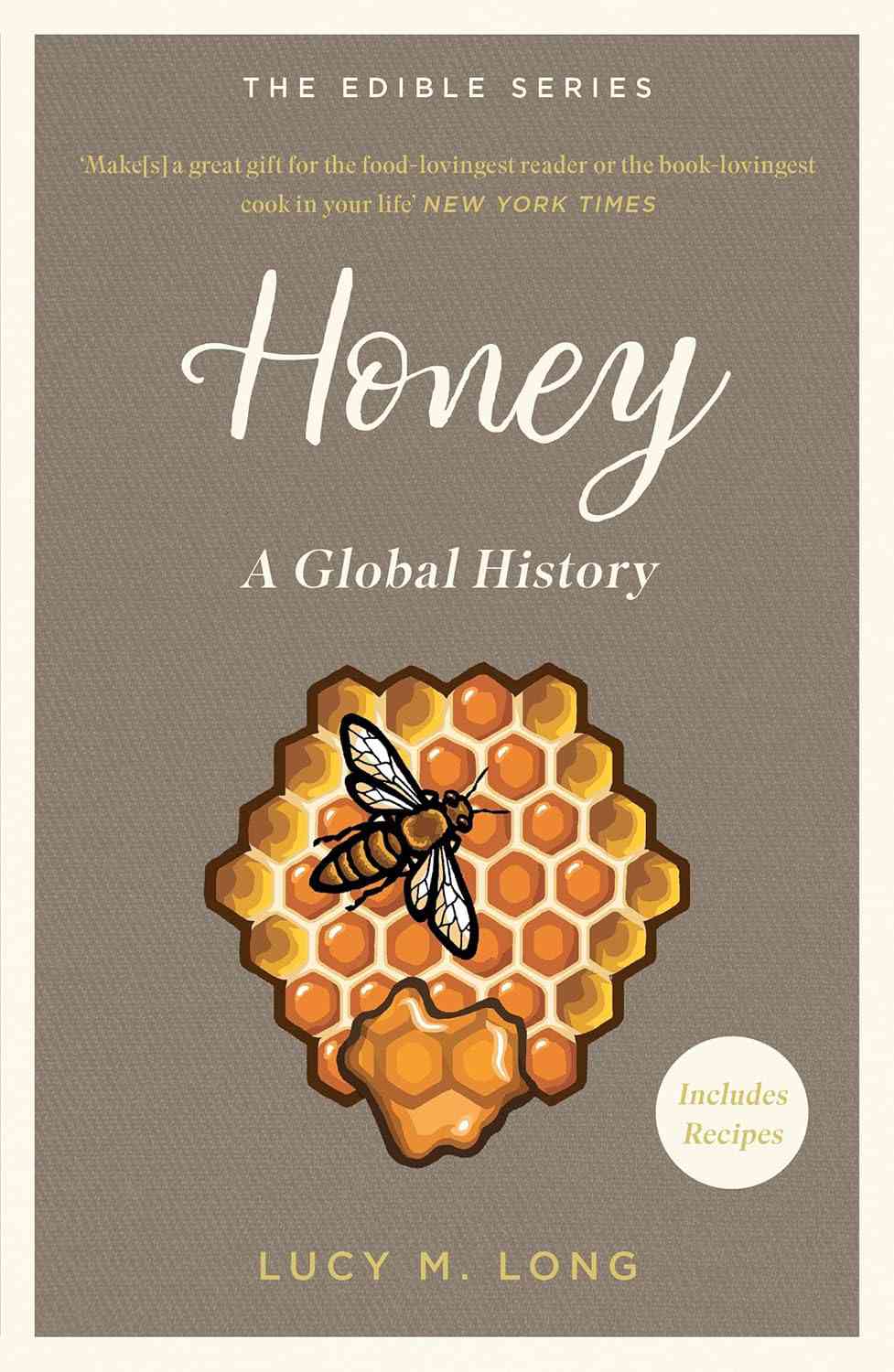
Excerpted with permission from Honey: A Global History, Lucy M Long, Pan Macmillan.

댓글

이 블로그의 인기 게시물

From our August Home and Garden publication: Columbia Gorge Beekeepers: Megachilinae / Leafcutter

 From our August Home and Garden publication: Columbia Gorge Beekeepers: Megachilinae / Leafcutter From our August Home and Garden publication: Columbia Gorge Beekeepers: Megachilinae / Leafcutter Summer is in full swing! Hopefully you have ventured outside exploring the flora that brings beauty to the Columbia Gorge area. Have you seen any native bees visiting their grocery store — the flowers and plants? Native bees are out foraging for nectar and pollen to support their brood (babies). Each egg must have a bit of nectar and a splash of pollen. Honey bees, on the other hand, forage not only for their brood but sustenance for the long winter months ahead. The native bee’s queen hibernates through the wintry season, only surviving one year. Thus, the need for nectar stores is unnecessary. There exists a symbiotic relationship between pollinators and the flora surrounding their habitat. The plants and flowers rely on pollinators to move pollen from the flower’s anther (male part) to...

She Was Dying—Then a Swarm of Stinging Bees Healed Her

She Was Dying—Then a Swarm of Stinging Bees Healed Her One sunny day, Ellie Lobel, who had a Ph.D. in nuclear physics and three children, was attacked by a horde of Africanized bees, commonly called “killer” bees. Lobel shielded her eyes and expected to have a deadly anaphylactic reaction, she said in a 2015 BBC article describing her experience. The 45-year-old English woman was in palliative care in California because she was dying from Lyme disease. She had stepped outside to experience some sunshine and peace when the bees attacked. Swollen and in pain, Lobel expected the end was imminent. At least, that’s what she thought. Fifteen years earlier, Lobel had unknowingly endured a tick bite. The tick carried the bacteria Borrelia burgdorferi, which causes Lyme disease. If caught in time, Lyme disease is treatable with antibiotics, though the bacteria are known to sneak around the immune system and even cause flare-ups long after apparent recovery. Borrelia burgdorferi can travel e...

BeeArc Project: Pioneering a Sustainable Future for Bees and Humans

BeeArc Project: Pioneering a Sustainable Future for Bees and Humans In the picturesque village of Goathland, near Whitby, a groundbreaking initiative, the £5m BeeArc project, has taken flight. Designed for environmental activists, concerned citizens, and curious minds, this project delves into the intricate challenges faced by honeybees and, by extension, humanity. In an era of unprecedented change and instability, the honeybee finds itself at a critical juncture. Colony Collapse Disorder, where bees abandon their hives en masse, has wreaked havoc globally, with a staggering 40% disappearance in the US in 2014. The crisis is not just a distant woe; it's affecting honeybees locally, threatening their very existence. James Fearnley, founder and project director, passionately states, “The honeybee is at the end of its tether. The colonies are literally falling apart.” Drawing on 30 years of research, Fearnley proposes a revolutionary approach – harnessing natural medicines from honeyb...

Non-contact exposure to dinotefuran disrupts honey bee homing by altering MagR and Cry2 gene expression

  Non-contact exposure to dinotefuran disrupts honey bee homing by altering  MagR  and  Cry2  gene expression Dinotefuran is known to negatively affect honeybee ( Apis mellifera ) behavior, but the underlying mechanism remains unclear. The magnetoreceptor ( MagR , which responds to magnetic fields) and cryptochrome ( Cry2 , which is sensitive to light) genes are considered to play important roles in honey bees’ homing and localization behaviors. Our study found that dinotefuran, even without direct contact, can act like a magnet, significantly altering  MagR  expression in honeybees. This non-contact exposure reduced the bees’ homing rate. In further experiments, we exposed foragers to light and magnetic fields, the  MagR  gene responded to magnetic fields only in the presence of light, with  Cry 2 playing a key switching role in the magnetic field receptor mechanism ( MagR–Cry2 ). Yeast two-hybrid and BiFc assays confirmed an interactio...

10 deadliest bees you should never mess with

  10 deadliest bees you should never mess with Bees play a vital role in pollination and ecosystems, but not all are the gentle garden visitors we imagine. Some bees—and wasp-like relatives—pack a powerful sting, show extreme aggression, or defend their nests with deadly force.  Whether it’s their painful venom, swarming behavior, or territorial nature, these species are not to be taken lightly. From tropical rainforests to suburban backyards, they command respect. In this list, we explore the world’s top 10 deadliest bee and bee-like species you should never provoke, complete with their nicknames, regions, threat levels, and evolutionary origins. Dangerous bees  found across the world including  Yellow Jacket , Warrior Wasp, and more 1. Africanised  Honey Bee  – “The Killer Bee” One of the most dangerous stinging insects in the world, the Africanised honey bee is found across South and Central America and parts of the southern U.S.  These bees are ext...

What to do if you see a bee on the ground, according to an expert

What to do if you see a bee on the ground, according to an expert You've no doubt seen bees buzzing around flowers or even nestling among blades of grass, but when you spot them chilling on the pavement it can raise various questions – not least: "Are they okay?" Even if they are still alive – the average lifespan of workers is just four to six weeks – bumblebees occasionally end up on the ground for of a variety of reasons. Amy Ross, a senior ecologist for Kent Wildlife Trust , explains to Yahoo UK why this happens and, more crucially, what you can do to help them. What type of bees are they? There are more than 250 species of bees native to the UK. (Getty Images) It's important to note that there are more than 250 species of bees native to the UK – 24 of which are bumblebees. Bumblebees can be identified using this helpful chart from the Bumblebee Conservation Trust and are more than likely the kind you'll spot on the ground. What's more, around 70% of th...

Suncheon Bay: A Triumph for Environmental Stewardship and Migratory Bird Conservation

  Suncheon Bay: A Triumph for Environmental Stewardship and Migratory Bird Conservation Nestled in the heart of Haeryong-myeon, Suncheon-si, Jeollanam-do, the scenic 92m high hill on the 1st of January provides a breathtaking panorama of Suncheon Bay. The awe of around 10 tourists is palpable as they gaze down from two Yongsan observatories onto the vast expanse below, where approximately 400 cranes gracefully take flight over 2,800 ha of pristine mudflats and reed fields. The Suncheon Bay Eco-Friendly Project In 2006, Suncheon City, in collaboration with its citizens, embarked on an ambitious eco-friendly project when Suncheon Bay earned recognition in the Ramsar Convention—an international treaty for wetland protection. Over the years, the project has yielded remarkable results, with the number of whooping cranes doubling in just four years. Preserving Biodiversity Through Strategic Initiatives To safeguard the ecosystem, preventive measures were implemented against diseases like...

Giant hail threat increases for Australian cities as climate warms

Giant hail threat increases for Australian cities as climate warms In short: Hailstorms will become more frequent in Brisbane, Sydney and Canberra, while the risk of "giant" hail will increase for others, including Melbourne and Perth. The new study by the University of New South Wales shows the relationships between a warming climate and the severity of hailstorms across most major Australian cities. What's next? The study's lead researcher, Dr Tim Raupach, says it is imperative to reduce emissions, but Australia also needs to consider the increased risk from hail damage in its building codes. The frequency of "giant" hail and the number of hail days in a season could increase substantially for multiple Australian cities as the climate warms, a new study has found. The University of New South Wales study modelled the severity of hailstorms for the current and future climate across Australia's most hail-prone major cities, including Brisbane, the Sydney...

Decoding the Cold: Understanding the Dynamics of Cold Snaps and Waves

  Decoding the Cold: Understanding the Dynamics of Cold Snaps and Waves As we brace ourselves for an impending cold snap, it's crucial to demystify the nuances between a fleeting chill and a more prolonged, impactful cold wave. Meteorologically speaking, these are two distinct phenomena, each with its own characteristics and potential consequences. 🌬️❄️ Cold Snap vs. Cold Wave:  🔄🌡️ When the cold lingers for a brief period, typically 1-2 days, we label it a cold snap. It's transient and relatively mild. However, when the cold persists for three days or more, spreading its influence far and wide, we term it a cold wave. This distinction is pivotal as it helps us gauge the severity and duration of the impending chill. Siberian Cold Snap: A Tidal Wave of Cold Waves:  🌊❄️ Drawing a metaphorical comparison to a tidal wave, the Siberian cold snap ebbs and flows, resembling the rhythmic patterns of a tide. This upcoming cold snap is poised to be a formidable cold wave, impac...

“Global honey crisis”: Testing technology and local sourcing soars amid fraud and tampering concerns

  “Global honey crisis”: Testing technology and local sourcing soars amid fraud and tampering concerns The World Beekeeping Awards will not grant a prize for honey next year due to the “inability” to thoroughly test honey for adulteration. The announcement comes amid the rise of honey fraud in the EU, where a 2023 investigation found that 46% of 147 honey samples tested were likely contaminated with low-cost plant syrups.  Apimondia, the International Federation of Beekeepers’ Associations, organizes the event at its Congress, whose 49th edition will be held in Copenhagen, Denmark, in September 2025. The conference brings together beekeepers, scientists and other stakeholders. “We will celebrate honey in many ways at the Congress, but honey will no longer be a category, and thus, there will be no honey judging in the World Beekeeping Awards. The lessons learned from Canada 2019 and Chile 2023 were that adequate testing was impossible if we are to award winning honey at the Con...