Why Beekeepers Are Losing Up to 70% of Their Hives
Without honeybees, we would lose most commercial honey production, and many fruit, nut, and vegetable crops would see reduced yields due to the loss of a major pollinator. While a single honeybee is small, the loss of large numbers of bees can threaten the survival of entire colonies.
In 2025, it’s estimated that the U.S. could lose 60-70% of commercial honeybee colonies. These numbers aren’t just alarming—they’re downright catastrophic. One bee farm in Wyoming has already lost 67% of its colonies this year. These hive losses echoed throughout the Rocky Mountains, coming through as a clear warning for the rest of the country. The biggest question on everyone’s mind is this: What’s killing our honeybees? We consulted an expert to gather information and gained some crucial insights on how to protect future colonies.
Threats to Honeybees
Cowboy State Daily reports that several factors contribute to the decline in honeybee populations. One hive owner was interviewed, claiming he knew a fellow beekeeper who faced $4 million in sudden losses. The beekeeper’s hives rapidly declined from 20,000 to one active, healthy colony. Recently, these losses have spanned from Colorado to California, impacting both honeybee populations and the beekeeping industry. Honeybee transports are also facing issues because the bees are dying during transit. If they can’t make it to their destination, they can’t produce honey, which is a serious issue.
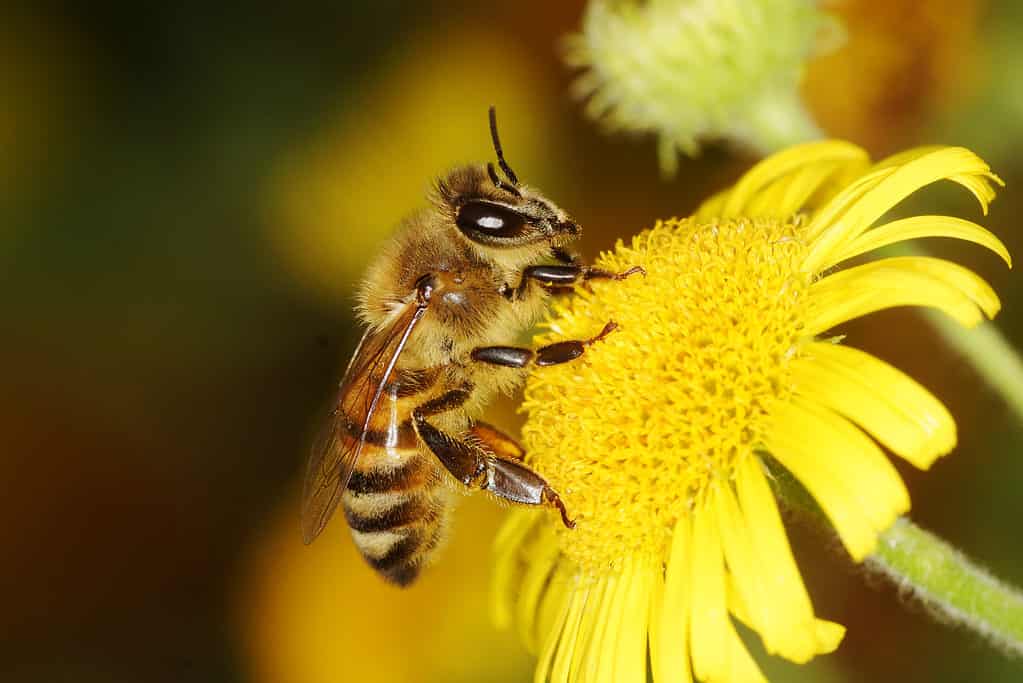
Producing honey is a team effort.
©Maciej Olszewski/Shutterstock.com
To put this into perspective, it takes approximately 556 worker bees to produce one pound of honey. This is the amount of honey typically found in the largest jar available at the grocery store. These bees work hard, flying roughly 55,000 miles combined to find the nectar to make this honey. It takes about two million flower blossoms to provide this amount of nectar, most of which have been pollinated by the same bee species. This process is labor-intensive, continuous, and essential for both bees and humans. Since a single worker bee produces only one-twelfth of a teaspoon of honey in its lifetime, the collective effort of the entire hive is essential for survival. Unfortunately, honeybees face several environmental and biological factors that hinder their chances.
Climate Change
We spoke with Mateo Kaiser, University of California, Davis Certified Master Beekeeper and Managing Director of Swarmed, to learn about the current honeybee status. He says the issue isn’t necessarily that honeybees are dying; instead, it’s a more complex problem. “We’re now working to protect 150 million bees this spring and contribute the data we collect along the way to honey bee research. The issue is less that honey bees are dying out, and I often talk to people who are surprised to hear that honey bees aren’t on the endangered species list,” Kaiser says. “It’s more so that beekeeping is becoming increasingly difficult as beekeepers struggle to keep up with losing 30, 40, or even 50% of their colonies each winter. The worry is that eventually, beekeepers won’t be able to keep up, which would put a huge strain on agriculture, since three-fourths of our most productive crops are pollinated by bees.”
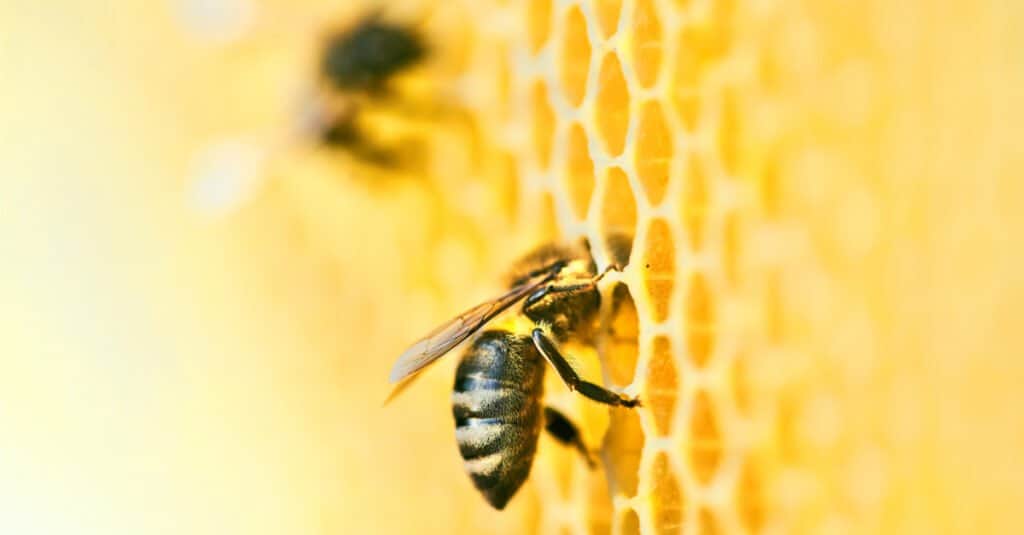
Bees are at risk of starving or freezing to death when the temperature suddenly drops.
©Aleksandr Rybalko/Shutterstock.com
Part of the issue involves changes in a honeybee’s environment. Cowboy State Daily reports that inconsistent heat combined with drought caused significant hive losses. Hot spring weather signals the awakening period for queen honeybees, calling them from hibernation while overwintering. If the temperature remains steady, bees will be active and continue to pollinate. If it changes suddenly, dropping below freezing or close to it, the bees can starve and even freeze to death. This is capable of destroying an entire hive within a single night. Kaiser emphasizes this change, noting that he has seen the effects firsthand while rescuing honeybee swarms. “There have been clear changes. Swarms are appearing earlier in the year and in places they did not use to,” he says.
“We have seen February swarms in parts of California and Texas, and long delays in other regions because of extended cold or drought. Bee behavior is closely tied to local weather. When the seasons shift unpredictably, bees shift too.”Mateo Kaiser, University of California, Davis Certified Master Beekeeper and Managing Director of Swarmed
Kaiser goes on to explain that planning for these changes can be unpredictable, but not impossible to navigate. “At Swarmed, we have been tracking these changes through a growing map of more than 15,000 past swarm reports. We are open-sourcing that data so both beekeepers and researchers can use it to spot trends and adjust to what is coming,” he says. Honeybees are natural indicators when it comes to weather mapping. They sense environmental changes and can adjust their swarm patterns in response to incoming weather, providing valuable insights for beekeepers. Often, they even know when a storm is about to blow through and will work harder in the days leading up to it. Farmers have long employed this method of observation, and beekeepers and rescue organizations, such as Swarmed, now utilize it as well.
A Major Food Shortage
A honeybee’s diet consists solely of nectar, which is sourced from a wide variety of plants. Climate change also affects this plant life. When the weather transitions from two extremes—i.e., from a drought to an unseasonably wet period—it alters the growing pattern. In turn, this affects the bees and their ability to pollinate. Many bees die of starvation, which is another reason beekeepers can lose entire hives suddenly. “Beekeepers are under serious strain. Replacing a lost colony can cost $150 to $250, and when overall losses reach 60 percent, like they did this year for many commercial beekeepers, it adds up quickly. For some beekeepers, those costs can push them out of beekeeping entirely,” says Kaiser, detailing how devastating this can be.
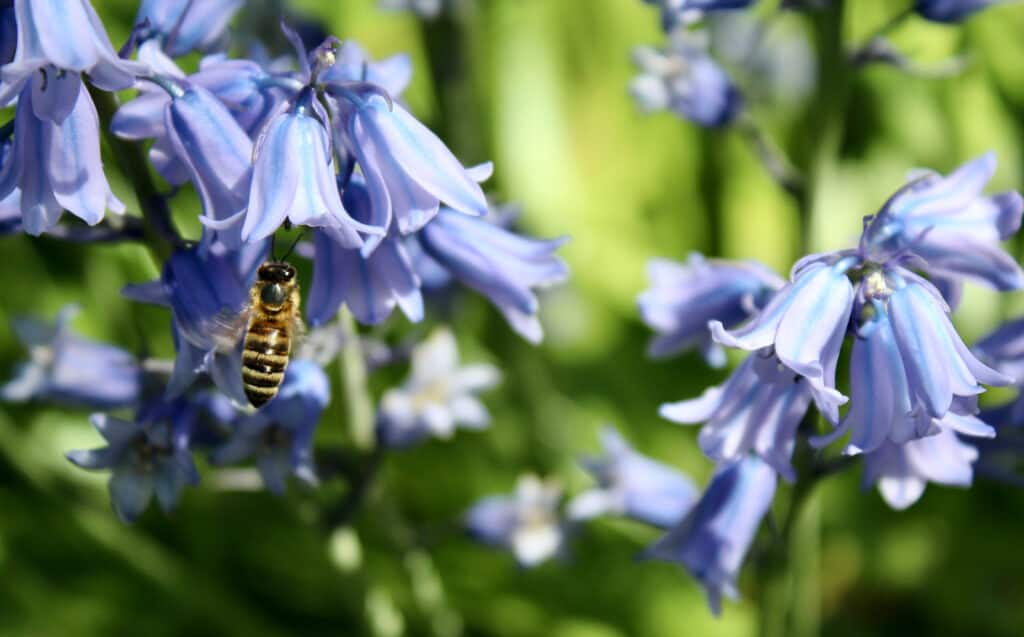
Not all pesticides are safe for bees.
©Svetlanko/Shutterstock.com
Honeybees avoid flying in the rain, which results in days without foraging. If a drought follows rain, then food becomes scarce. This constant cycle puts honeybees at risk each season, with each growing season becoming increasingly unpredictable. If farmers struggle to anticipate plant growth patterns, honeybees are likely to be similarly affected. Some farmers and home gardeners also use pesticides to preserve what remains of their crop, which has its implications. If these pesticides are not bee-safe, then each pollinator that lands on a flower or plant leaf is susceptible to their toxins. A single pesticide incident in Oregon resulted in the death of between 45,830 and 107,470 bumblebees in 2013. It doesn’t just stop at bees, though; farm pesticides are also responsible for killing other equally essential pollinators.
Harmful Pesticides Look Like…
You can help the bees in your own backyard by avoiding harmful pesticides. These chemicals are detrimental to pollinators:Neonicotinoids
Pyrethroids
Carbamates
Organophosphates
Some fungicides and herbicides can inhibit the plant growth that pollinators need
Parasitic Varroa Mites and Diseases
While climate change and food scarcity are significant issues, there’s one more that overshadows both. “While there isn’t a single reason for bee decline, the main one to highlight is the parasitic varroa mites that spread diseases,” Kaiser informs us, adding, “Industry practices like moving bees across the country to pollinate monoculture fields are also a contributing factor, as well as other ecosystem factors like climate change and shrinking food sources for bees.” This fatal problem was also observed in the decline of the Rocky Mountain honeybee hive. Many beekeepers and transporters reported significant populations of varroa mites, which cause disease to spread quickly throughout a colony.
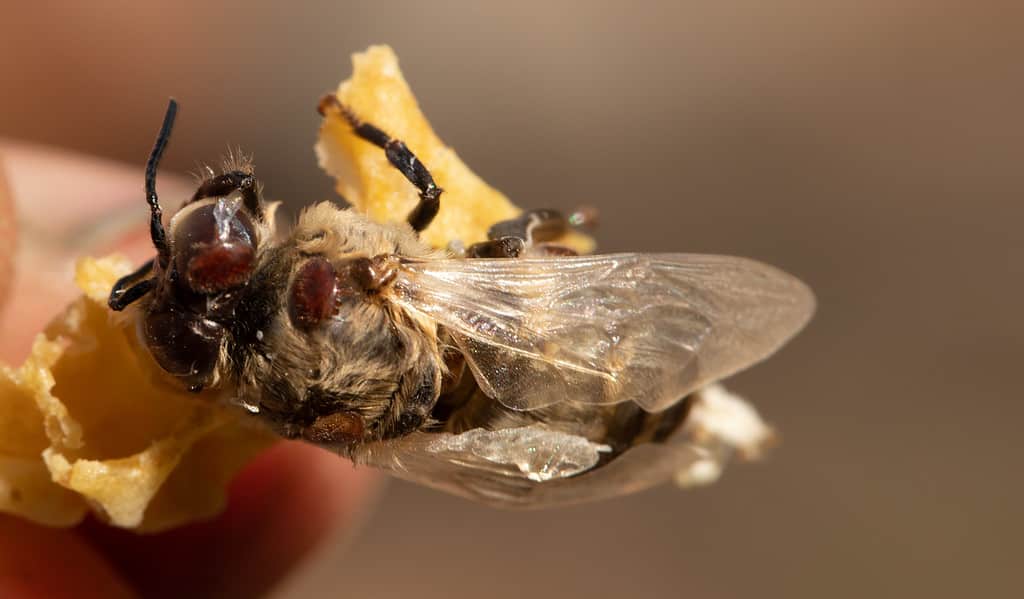
Varroa mites feed on live honeybees.
©iStock.com/MaYcaL
Despite their name, varroa mites are parasites that infect honeybees. They feed on live honeybees, which means beekeepers can’t typically detect them early on. Once the mite population has increased, signs of an infestation include reproductive issues (fewer larvae), crippled honeybees, impaired flight ability, a low return rate for worker bees, and weight loss in adult bees. By this time, an infestation may have been ongoing for up to four years without a beekeeper realizing it.
While hives can be fumigated, mites can develop a resistance, and it’s not always safe for large honeybee colonies. Some beekeepers use “soft chemicals,” such as oxalic acid for fumigation and formic acid, to control mite populations. More natural methods include thymol from the herb thyme, or hop beta acids, from hop plants. Unfortunately, none of these are foolproof.
What You Can Do At Home
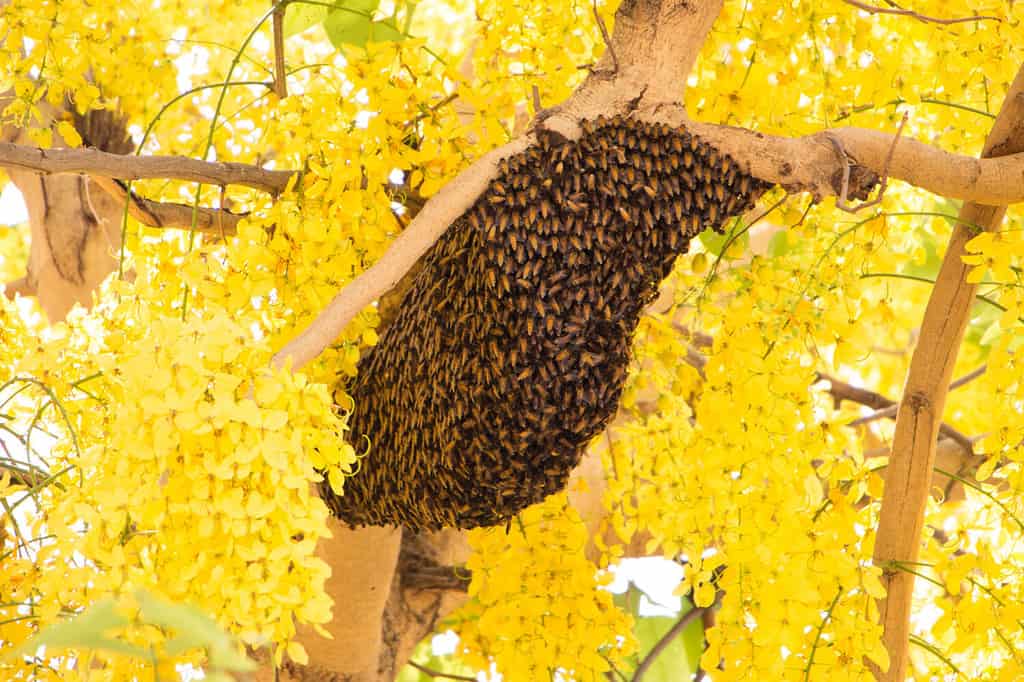
As a certified beekeeper and founder of a bee rescue organization, Kaiser has collected helpful tips for protecting bees. With so many bees displaced and searching for new hives, it’s not uncommon to encounter a colony in an unexpected location. Kaiser shared what to do if you happen to run into a swarm, and it may save the lives of thousands of honeybees. “If someone spots a swarm, the best thing they can do is report it to a local beekeeper. A swarm may look dramatic, but it is not usually dangerous. It is just a colony looking for a new home,” he reassures. “When people report swarms through Swarmed, nearby beekeepers from our network of 10,000 beekeepers can respond, often in minutes. That means fewer calls to pest control or emergency services, and more healthy colonies rehomed instead of lost.”
Bees are essential pollinators.
©Infinity_Pok/Shutterstock.com
He goes on to explain that by reporting swarms, the general public can also help local beekeepers. “One of the most effective ways to rebuild without buying bees is by catching swarms. So far this season, beekeepers using Swarmed have captured over 5,500 swarms. That is an estimated 82.5 million honey bees rescued, potentially producing more than 148,000 pounds of honey, and saving over $800,000 in replacement costs.” Kaiser shared with us that colonies often split during the spring and summer, resulting in random swarms. Sometimes, these end up in gardens, on the sides of homes or buildings, or in other unexpected parts of a property.
However, these can be highly beneficial in combating the decline of honeybee hives. “Beekeepers love to pick up swarms, oftentimes for free, as a way to replenish their hives, especially given that this year over 50% of beekeepers’ colonies died. And since without a beekeeper only one in four swarms survives, catching them helps to protect bee populations and supports beekeepers,” says Kaiser.

댓글
댓글 쓰기